Wednesday, October 31, 2012

Next, They’ll Outlaw Living With Your Mom

From a Mike Shedlock (“Mish”) blog post which you really ought to read in full:

Multigenerational Families

  • 3.7% in 2000
  • 4.0% in 2010
  • 5.6% in 2012

There was only a gain of .3% in the 10 years between 2000 and 2010, but a gain of 1.6% in the next two years.

That small 1.6% increase represents a decrease in demand of 1.216 million homes.

However, those survey results are for three generations and thus do not include all the kids graduating from college, with no job, and moving back home.

In other words, housing demand has been suppressed by this action, and the estimate above (1.2 million) is ON THE LOW END.

The post included data and this graphic -

- but there’s MORE to think about here.

- – - – -

EleBlog take:

There’s another aspect of this: All of those who’ve moved back in with Mom, and the others who have graduated from college and moved back home, are — probably — generating EXCESS demand for goods & services.

In other words: If they’re not saving money hand-over-fist (as the result of living at home) — which is what we hear — then these live-ins are spending more money than they otherwise would if they had their own place (rented or owned), paid their own bills, did their own laundry, and stocked their own refrigerators . . .

That’s DEBATABLE; it’s the EleBlog’s thinking on the matter. If we’re right, however, it means what we see in terms of Gross Demand right now — with quarterly increases in national GDP at very low levels –

…might be a mirage, and might be unsustainable. Think about that!

Source: http://electricalcontractor.com/?p=6708

electricians general contractor

Electrician Santa Monica – What Are Electrical Circuits?

An electrical circuit is the necessary pathway required to provide power to your appliances, gadgets and electronics. Each circuit is a closed loop system that is formed by wires, a power source, load, a switch and some sort of circuit protection. The electricity flows from the power source, into the circuit and ultimately into the object that it is plugged into. After the electricity has provided the necessary power to the device, it then flows back to the original electrical source, allowing the circuit to keep the electrical current flowing in a smooth manner. There are three different types of electrical circuits: the parallel circuit, the series circuit and the series-parallel circuit.

How Do They Work?

An electrician in Santa Monica installs an electrical panel that is then broken into several circuits that provide power to your home. Whenever you plug a device into an electrical outlet, or flip a switch, you are accessing electricity that is flowing through that particular circuit. By plugging in or flipping a switch, you are essentially completing the circuit. This allows power to flow freely from the positive terminal of the power source, through the wire, and back to the negative terminal. This allows us to provide on-demand electricity to our light bulbs, televisions, appliances and other electronics.

Types of Circuits

The simplest type of circuit is the series circuit, because it provides only one possible path for electrical current. If this circuit is broken at any point along this path, none of the devices on the circuit will work. A parallel circuit, on the other hand, contains more than one path for electrical current. If one of the paths is broken, electricity can still flow to other portions of the circuit. A series-parallel circuit combines these two circuit types. Some portions of the circuit are parallel, and some are attached in series. If one of the series circuits breaks, it will shut off power to anything in that circuit. If a parallel circuit breaks, all other parallel circuits will continue to function as normal.

As an electrician Santa Monica, The Electric Connection installs and maintains electrical circuits on a daily basis. For more information, or questions about our services, visit our main website at www.theelectricconnection.com/electrician-santa-monica-ca.

Source: http://www.theelectricconnection.com/electrician-santa-monica-electrical-circuits/

electrical certification electrical inspection electrical maintenance electrician certification electrical contracting

We’re Not ‘Deleveraging’

Household debt is back down to where it was in 2006, according to this TIME article. It’s a feel-good datapoint; some economists & market analysts cite it with approval and enthusiasm. There’s even a (very smart) guy out there, Ray Dalio, who talks about “beautiful deleveraging,” which is what he thinks he sees.

But the truth is contained in this bit:

The decline in household debt, however, doesn’t necessarily mean we’ve changed our ways. In fact, says Mustafa Akcay, an economist at Moody’s, “nearly 80% of deleveraging is caused by defaults.” Only 20% of the decrease comes as a result of what he calls “voluntary deleveraging,” i.e. the hard work of paying down our debts faster than we borrow.

“Most of the decline in outstanding aggregate debt has been defaults,” agrees Brookings Institution economist Karen Dynan, who last year analyzed financial institution charge-offsof loans that have gone bad and found that the value of defaults was about two-thirds as large as the total decline in household debt.

In other words: Folks aren’t suddenly smarter about money, or prudent. The deleveraging is coming from DEFAULTS.
What this means to EleBlog visitors: Don’t expect the U.S. economic situation to get a lot better any time soon. That includes new housing construction and construction overall.

Source: http://electricalcontractor.com/?p=6706

contractors electrical electrical contractors in

We’re Not ‘Deleveraging’

Household debt is back down to where it was in 2006, according to this TIME article. It’s a feel-good datapoint; some economists & market analysts cite it with approval and enthusiasm. There’s even a (very smart) guy out there, Ray Dalio, who talks about “beautiful deleveraging,” which is what he thinks he sees.

But the truth is contained in this bit:

The decline in household debt, however, doesn’t necessarily mean we’ve changed our ways. In fact, says Mustafa Akcay, an economist at Moody’s, “nearly 80% of deleveraging is caused by defaults.” Only 20% of the decrease comes as a result of what he calls “voluntary deleveraging,” i.e. the hard work of paying down our debts faster than we borrow.

“Most of the decline in outstanding aggregate debt has been defaults,” agrees Brookings Institution economist Karen Dynan, who last year analyzed financial institution charge-offsof loans that have gone bad and found that the value of defaults was about two-thirds as large as the total decline in household debt.

In other words: Folks aren’t suddenly smarter about money, or prudent. The deleveraging is coming from DEFAULTS.
What this means to EleBlog visitors: Don’t expect the U.S. economic situation to get a lot better any time soon. That includes new housing construction and construction overall.

Source: http://electricalcontractor.com/?p=6706

industrial electrician electric contracting electrican electrical contractors company certified electrician

Ask an Electrician Burbank – What is an Electrical Short?

Whenever you have a short circuit, it means that there was an accidental path created in your existing circuit, which generated a connection that was not there before the short occurred. Electricity will always follow the path of least resistance, which means that it will almost always follow this new path, rather than its intended path. This typically results in an abnormally high level of electrical current. The most common type of short is when two bare wires cross, such as when old insulation deteriorates, causing a loose connection which allows two wires to touch.

An electrical short is not something to take lightly. This increased current generates a great amount of heat, which can lead to sparks and fire. One way to identify an electrical short is by hearing a popping sound whenever that particular circuit is turned on. This is the sound of the electricity taking the path along the new connection that it has found, causing the circuit to experience a sudden overload. Smoke, flames and melting fixtures can follow, leading to larger fires and risk of shock in the immediate vicinity.

Another common source of electrical shorts is improper wiring. This can occur if the metal lining of a particular switch or outlet touches one of the wires. An electrician in Burbank must always find and fix shorts caused by damage, such as storm damage.

The most important thing to do whenever you have a short is to address it immediately. Because of the potential severity of this situation, call an electrician right away to have them inspect and fix the problem for you. A short left unrepaired can lead to more extensive damage, resulting in a much higher cost than if you had fixed the problem whenever it was first detected. For more information on electrical troubleshooting and our services, visit our main page at www.theelectricconnection.com/electrician-burbank-ca.

Source: http://www.theelectricconnection.com/electrician-burbank-electrical-short/

electricians jobs electrician work

Improve Lighting Without Spending Much Money or Time

I am often amazed by the things some home builders due to shave just a few dollars out of the construction costs of a new home. In our home, we have nice brass chandeliers at the entry and dining area and similar wall mount brass lighting fixtures in the hallways. On the ceilings of the [...]

Source: http://blog.atselectricinc.com/2012/10/improve-lighting-without-spending-much-money-or-time-2/

residential electrician electrician company electrician tools electrician commercial commercial electrician

Reputation the Best Tool

Cooper Electric photo from Enquirer 150x150 Reputation the Best Tool
Reputation the Best Tool
Cincinnati, OH - Jeff Wallner - Enquirer 
Electrical Contractors are among those hit hardest by the recession, with nearly 40 percent unemployment industrywide. And yet Cooper Electric has not laid off a single employee due to lack of work.

To the contrary, the 65-year-old South Cumminsville firm plans to hire additional staff next year in advance of a projected 20 percent increase in the $4 million in revenues estimated for 2011.

So how did they do it?

Company president Greg Hyland says it's the result of a commitment to customer satisfaction and retention, and a successful strategy built around a process called thermography.

"We've been able to keep the recession at bay," Hyland says. "Seventy percent of our business is repeats and referrals. That's a reflection of the people here. You're only as good as your last job. You can flush a 30 year relationship down the drain if you botch it."

That's why Cooper Electric created its Thermography Division more than a decade ago. Thermography is the use of infrared thermal imaging cameras to see inside electric equipment to uncover hot spots or other potential service issues before they result in a costly mechanical failure.

Cooper Electric's high-definition imaging provides a highly accurate measurement of heat that can reveal bad connections, overcurrent and poor insulation or ventilation.

Thermography is relatively old technology, and it's widely used throughout the industry. But Cooper Electric has parlayed the process into a preventive maintenance toll that has helped increase value for its customers and build-long term relationships.
 

Source: http://cooper-electric.net/reputation-the-best-tool/

electrical work electrical job

Energy Eye™ HVAC Energy Management System

We are Kauai’s only: Factory Certified Installer Certified Technical Service Provider Distributor Energy Eye™ is helping hotels save from 15% to 35% on their guest room air conditioning expenses – GUARANTEED!   What is Energy Eye? It is an energy management system designed for hotel/resort rooms, offices, and condominiums to control your AC cooling based on room occupancy. [...]

Source: http://www.blueskyelectric.net/blog/energy-eye-hvac-energy-management-system/

commercial electric electric contractor contractor electric electrician job electricians jobs

Tuesday, October 30, 2012

Twenty Bad Things About Wind Energy, and Three Reasons Why

Editor note: This is an updated version of a previous post at MasterResource: “Fifteen Bad Things About Wind Energy, and Three Reasons Why,” one of the two most read posts in the history of MasterResource.

Trying to pin down the arguments of wind promoters is a bit like trying to grab a greased balloon. Just when you think you’ve got a handle, it morphs into a different shape and escapes your grasp. Let’s take a quick highlight review of how things have evolved with wind merchandising.

1 – Wind energy was abandoned well over a hundred years ago, as even in the late 1800s it was totally inconsistent with our burgeoning, more modern needs for power. When we throw the switch, we expect that the lights will go on – 100% of the time. It’s not possible for wind energy, by itself, to EVER do this, which is one of the main reasons it was relegated to the dust bin of antiquated technologies (along with such other inadequate energy sources as horse and oxen power).

2 – Fast forward to several years ago. With politicians being convinced that Anthropogenic Global Warming (AGW) was an imminent catastrophic threat, lobbyists launched campaigns to favor anything that would purportedly reduce carbon dioxide. This was the marketing opportunity that the wind energy business needed. Wind energy was resurrected from the dust bin of power sources, as its promoters pushed the fact that wind turbines did not produce CO2 while generating electricity.

3 – Of course, just that by itself is not significant, so the original wind development lobbyists then made the case for a quantum leap: that by adding wind turbines to the grid we could significantly reduce CO2 from those “dirty” fossil fuel electrical sources (especially coal). This argument became the basis for many states implementing a Renewable Energy Standard (RES) or Renewable Portfolio Standard (RPS) – which mandated that the state’s utilities use (or purchase) a prescribed amount of wind energy (“renewables”), by a set date.

Why was a mandate necessary? Simply because the real world reality of integrating wind energy made it a very expensive option. As such, no utility companies would likely do this on their own. They had to be forced to. For more on the cost, please keep reading.

4 – Interestingly, although the stated main goal of these RES/RPS programs was to reduce CO2, not a single state’s RES/RPS requires verification of CO2 reduction from any wind project, either beforehand or after the fact. The politicians simply took the sales peoples’ word that consequential CO2 savings would be realized!

5 - It wasn’t too long before utility companies and independent energy experts calculated that the actual CO2 savings were miniscule (if any). This was due to the inherent nature of wind energy, and the realities of necessarily continuously balancing the grid, on a second-by-second basis, with fossil-fuel-generated electricity. The frequently cited Bentek study (How Less Became More) is a sample independent assessment of this aspect. More importantly, there has been zero scientific empirical proof provided by the wind industry to support their claims of consequential CO2 reduction.

6 – Suspecting that the CO2 deception would soon be exposed, the wind lobbyists took pre-emptive action, and added another rationale to prop up their case: energy diversity. However, since our electricity system already had considerable diversity (and many asked “more diversity at what cost?”) this hype never gained much traction. Back to the drawing board….

7 - The next justification put forward by the wind marketers was energy independence. This cleverly played on the concern most people have about oil and Middle East instability. Many ads were run promoting wind energy as a good way to reduce our “dependence on Middle Eastern oil.”

None of these ads mentioned that only about 1% of our electricity is generated from oil. Or that the US exports more oil than we use for electricity. Or that our main import source for oil is Canada (not the Middle East). Despite the significant omissions and misrepresentations, this claim still resonates with many people, so it continues to be pushed. Whatever works.

8 – Knowing full well that the assertions used to date were specious, wind proponents manufactured still another claim: green jobs. This was carefully selected to coincide with widespread employment concerns. Unfortunately, when independent qualified parties examined the situation more closely, they found that the claims were wildly exaggerated. Big surprise!

Further, as attorney and energy expert Chris Horner has so eloquently stated:

There is nothing – no program, no hobby, no vice, no crime – that does not ‘create jobs.’ Tsunamis, computer viruses and shooting convenience store clerks all ‘create jobs.’ So that claim misses the point. Since it applies to all, it is an argument in favor of none. Instead of making a case on the merits, it is an admission that one has no such arguments.

See a very detailed critique of the jobs situation at PTCFacts.Info. Listed there are TEN major reasons why using jobs as an argument is not appropriate or meaningful. Additionally there is a list of some 45 reports written by independent experts, and they all agree that renewable energy claims are based on numerous fallacies.

9 – Relentlessly moving forward, wind marketers then tried to change the focus from jobs to “economic development.” The marketers typically utilized a computer program called JEDI to make bold economic projections. Unfortunately, JEDI is a totally inadequate model for accurately arriving at such numbers, for a variety of technical reasons. The economic development contentions have also been shown to be inaccurate, as they never take into account economic losses that result from wind energy implementation – for example agricultural losses due to bat killings, and job losses due to higher electricity costs for factories, hospitals and numerous other employers.

Additionally, as with jobs, economic development in-and-of-itself has nothing to do with the merits of wind energy as a power source. Let’s say we have a transportation RES mandating that 20% of a state’s vehicles be replaced by horse power by 2020. There would be a LOT of “economic development” (making horse carriages and buggy whips, building horse barns, growing and shipping hay) that would result from such an edict. But would that be any indication that it is an intelligent, beneficial policy?

10 – Along the way, yet another claim began making the rounds: that wind energy is low cost. This is surprisingly bold, considering that if that were really true, RES/RPS mandates would not be necessary. For some reason, all calculations showing wind to be “low cost” conveniently ignore exorbitant subsidies, augmentation costs, power adjusting (see next item), additional transmission costs, and so on. Independent analyses of levelized costs (e.g. from the EIA) have concluded that (when ALL applicable wind-related costs are accurately calculated) wind energy is MUCH more expensive than any conventional source we have.

11 – A subtle (but significant) difference between wind energy and other conventional sources of electricity is in power quality. This term refers to such technical performance factors as voltage transients, voltage variations, waveform distortion (e.g. harmonics), frequency variations, and so forth. The reality is that wind energy introduces many more of these issues than does a conventional power facility. Additional costs are needed to deal with these wind-caused problems. These are rarely identified in pro-wind economic analyses.

12 – When confronted with the reality that wind energy is considerably more expensive than any conventional source, a common rejoinder is to object to that by saying that once the “externalities” of conventional sources are taken into account, wind is less expensive than those conventional sources.

To gullible sheeple, this might make sense. But consider the following two points. First, externality analyses posited by wind zealots never take into account the true environmental consequences of wind energy (rare earth impacts [see below], human health effects, bird and bat deaths, the CO2 generated from a two million pound concrete base, etc.).

Second, the “externalities” for things like coal are always only the negative part. If these advocates want a true big picture calculation, then they need to also add in the benefits to us from low-cost coal-based electricity. Considering that coal played a major part in our economic success and improved health and living standards over the past century, such a plus factor would be enormous.

[BTW there is some evidence that the negative externalities (e.g. about coal related asthma claims) are exaggerated. What a surprise!]

13 – A key grid ingredient is Firm Capacity. (A layman’s translation is that this is an indication of dependability.) Conventional sources (like nuclear) have a Firm Capacity of nearly 100%. Wind has a Firm Capacity of about 0%. Big difference!

14 – Since this enormous Firm Capacity discrepancy is indisputable, wind energy apologists then decided to adopt the strategy that wind energy isn’t a “capacity resource” after all, but rather an “energy resource.” Surprisingly, this may be the first contention that is actually true! But what does this really mean?

The reality is that saying “wind is an energy source” is a trivial statement, on a par with saying “wind turbines are white.” Lightning is an energy source. So what? The fact is that your cat is an energy source too. In this Alice-in-Wonderland reality, connecting the cat to the grid (after heavily subsidizing it, of course), makes as much sense as does connecting puff power.

15 - Wind marketers then hit on a new tactic: that we should use wind as it is a plentiful resource. This is a strategy based on a part truth: that we should be utilizing energy sources that are abundant, reliable, and low-cost. There are two major deficiences in this thinking.

First, abundant sources that are not reliable and that are not low-cost (i.e. wind energy), are a net detriment to our economy. Second, if they are really saying that abundance should be our primary focus, then they should be promoting nuclear power and geothermal energy. Both of these sources have something like a million times the available energy that wind does. Both of those are orders of magnitude more reliable than wind is. Both are lower cost when comparing the actual levelized cost of wind energy (e.g. Wind+ Gas).

16 - One of the latest buzz-words is sustainability. One has to give these marketeers credit for being persistently imaginative. The truth about sustainability is:

a) It is totally hypocritical to have wind advocates attacking fossil fuels as unsustainable, when the wind business has an ENORMOUS dependency on fossil fuels for their construction, delivery, maintenance and operation. This article explains some of it.

b) Nothing is sustainable, as this piece accurately explains.

c) Wind energy is our LEAST sustainable option!

17 – A related pitch is that our adoption of wind energy will help us break “our fossil fuel dependence.” Guess what? The reality is that wind actually guarantees our perpetual dependence on fossil fuels! In addition to wind turbines’ dependence on fossil fuels for manufacture, delivery and maintenance, the only way wind energy can quasi-function on the grid is to have it continuously augmented by a fast responding power source – which for a variety of technical and economic reasons is usually gas.

It’s rather amusing that the same environmental organizations that support wind energy are also against shale gas. That’s like saying that you love Italian food but hate tomato sauce. The two are paired together like Fred Astaire and Ginger Rogers.

Realizing that their best defense is a good offense, some of these hucksters are now contending the inverse: that wind actually augments gas! So wind that generates electricity 25±% of the time is “augmenting” gas, which has to supply the 75±%! This immediately brings to mind the British army band playing “The World Turned Upside Down.”

18 – The claim that wind energy is “green” or “environmentally friendly” is laugh-out-loud hilarious – except for the fact that the reality is not funny at all. Consider just one part of a turbine, the generator, which uses considerable rare earth elements (2000± pounds per MW).

The mining and processing of these metals has horrific environmental consequences that are unacknowledged and ignored by the wind industry and its environmental surrogates. For instance, a typical 100 MW wind project would generate approximately:

a) 20,000 square meters of destroyed vegetation,

b) 6 million cubic meters of toxic air pollution,

c) 33 million gallons of poisoned water,

d) 600 million pounds of highly contaminated tailing sands, and

e) 100,000 pounds of radioactive waste. (See this, and this, and this.)

19 – Modern civilization is based on our ability to produce electrical POWER. Our modern sense of power is inextricably related to controlled performance expectations: when we turn the knob, we expect the stove to go on 100% of the time – not just on those wildly intermittent occasions when the wind is blowing within a certain speed range.

Underlying a lot of the wind lobbyists’ claims is a carefully crafted, implied message that there is some kind of wind energy “equivalency” to conventional sources. This assumption is the basis for such assertions that XYZ wind project will power 1,000 homes. Such claims are totally false. They are dishonest from several perspectives: the most obvious error being that XYZ wind project will NEVER provide power to any 1000 homes 24/7 (or really seconds or fractions of a second within each minute of each hour). It might not provide power for even one home 86400/1440/24/7.

Yet we see this same “equivalency” message conveyed even more subtly on EIA tables for levelized costs. Wind and conventional sources should not be on the same table, but they are (defended only by a small footnote). One useful analogy is to consider the cost, speed, reliability and load capacity of a single eighteen-wheeler truck in making daily interstate deliveries of furniture, heavy equipment or other large products. This semi-truck is equivalent to a nuclear plant.

In energy generation terms, the wind turbine equivalent is to attempt to replace the single truck with golf carts. How many golf carts would it take to equal the cost, speed, reliability and load capacity of a single eighteen-wheeler in making daily interstate deliveries? This is a trick question, as the answer is that there is no number that would work: not ten, not a hundred, not ten thousand, not a million. Exactly the same situation exists in the electricity sector: no number of turbines will ever equal the cost, reliability and output of one conventional electricity plant.

20 – A close cousin of the prior illegitimate contention is that “The wind is always blowing somewhere, so spreading wind projects out will result in a combination that has a dependable output.” Like essentially all the wind industry mis-infomercials do, this bald assertion has a soothing, reassuring ring. But this marketing claim is unsupported by any empirical, real world evidence. For instance, in southeastern Australia about 20 wind projects are spread out over a single 1000± mile long grid. Yet the combined result in no way even approximates the consistent dependable performance of our primary conventional sources.

Again, our modern society is based on abundant, reliable, affordable electric power. All these specious claims for wind energy are simply part of a long line of snake oil sales spiels – intended to fool the public and enable politicians to justify favoring special interests by enriching various rent-seekers (which will then return the favor via campaign contributions and other reelection support).

They get away with this primarily for three basic reasons.

1 - Wind proponents are not asked to independently PROVE the merits of their claims before (or after) their product is forced on the public.

2 - There is no penalty for making bogus assertions or dishonest claims about their product’s “benefits,” so each successive contention is more grandiose than the last.

3 - Promoting wind is a political agenda that is divorced from real science. A true scientific assessment is a comprehensive, objective evaluation with transparent real world data – not on carefully massaged computer models and slick advertising campaigns, which are the mainstay of anti-science evangelists promoting political agendas.

So, in effect, we have come around full circle. A hundred-plus years ago, wind energy was recognized as an antiquated, unreliable and expensive source of energy – and now, after hundreds of billions of wasted tax and consumer dollars, we find that (surprise!) it still is an antiquated, unreliable and expensive source of energy. This is what happens when science is relegated to a back-of-the-bus status.

Paraphrasing Dr. Jon Boone:

Let’s see the real world evidence for the lobbyists’ case. I’m weary of these relentless projections, uncontaminated as they are by reality. In a nutshell, what these profiteers are seeking to do, through methodological legerdemain, is to make wind appear to be what it is not. This is a plot lifted out of Cinderella and her step-sisters, or the Emperor’s New Clothes. It’s really a story of class aspirations, but one that is bizarrely twisted: giving wind a makeover to make her seem fetching and comely when in fact she’s really a frog.

When you hear that wind opposition is all about NIMBYs, think about the above points, and then reflect on what NIMBY really means: The Next Idiot Might Be You.

But consider the sources. When a major turbine manufacturer calls a catastrophic failure like a blade falling off component liberation, we know we are in for an adventurous ride in a theme park divorced from reality.

See EnergyPresentation.Info for more detailed explanations, including charts, photographs, entertaining graphics, and numerous references.

———

John Droz, Jr., a physicist & environmental advocate, can e reached at aaprjohn@northnet.org.

Source: http://www.masterresource.org/2012/10/20-bad-things-wind-3-reasons-why/

licensed electrician electrical supply company

Electrician in Burbank Advises – Avoiding Electrical Faults and Fires

Although you may not think that an electrical malfunction is liable to happen to you, studies have shown that the majority of all house fires result from some sort of electrical malfunction. Furthermore, many of the homeowners affected by these fires reported that something seemed somewhat wrong, but unimportant. As a result, the issue was ignored, leading to a catastrophic fire. Because of this, it is very important to address any electrical odors or other issues that could eventually lead to dangerous shock or fire. Never underestimate the power of your electrical system, and be familiar with the signs and symptoms below that could signal a dangerous electrical problem.

Frequently Tripped Circuit Breakers

If a circuit breaker in your home trips constantly, you should treat this as a potentially serious electrical issue. Whenever this happens, there are a variety of things that you can do. You should, however, start by calling an electrician in Burbank to discuss the problem. Your circuit breaker is designed to stop the flow of electricity into your home whenever dangerous or inconsistent levels of electricity are detected. This could happen because of an overloaded circuit, short circuit or ground fault. Check to see if your circuit is overloaded, and then call your electrician. This could be much more than a minor annoyance.

Outdated Electrical Systems (Fuse Boxes)

If your home is still equipped with an older fuse box, you should call your Burbank electrician to have them perform an electrical service upgrade. Because these systems were not designed to handle the electrical load that we require today, fuses blow frequently and can result in dangerous situations.

Other Warning Signs:

  • Burning smell when operating an appliance
  • Warm, discolored or sparking electrical outlets
  • Being shocked by an appliance
  • Constantly flickering or dim lights

You owe it to yourself to keep your electrical system as safe as possible. If you experience any of these signs and symptoms, or just feel like something might be wrong, call The Electric Connection today.

Source: http://www.theelectricconnection.com/electrician-burbank-advises-avoiding-electrical-faults-fires/

electrical tools electric work electrical services electrical parts home contractors

LED Lighting Fixtures Added To The Swiss Alps Jungfraujoch Train Experience

With the help of ETC Selador Desire LED lighting fixtures, a large section of the train journey to the Jungfraujoch station in the Swiss Alps has been turned into a compelling tourist experience.

Up to 5,000 people visit Jungfraujoch each day, with stunning views from the platform, restaurants and a geological station greeting visitors once they’ve finally reached the top. Now, visitors can explore six special attraction areas as part of a new museum-like experience thanks to the new lighting fixtures. A two-minute, 16-second light, sound and automation show for each area was developed by communications company Steiner Sarnen AG.

The ETC fixtures have the ability to seamlessly change color temperature to affect the mood of the lighting for specific parts of the cave.

“We found the Desire fixtures really easy to use,” says Lighting Designer Serge Schmuki of Tokyo Blue. “Currently, we operate the lights in HSIC mode, which means we have control over hue and saturation, as well as the opportunity to adjust the color temperature in both white light and when color mixing.

The IP66 rating on the Desire fixtures certifies that they are both water- and dust-tight.

“The rugged outdoor lights were factory rebuilt for our specific requirements,” says Jürg Bichsel of installation company Stageparts. “Both ETC as the manufacturer and the Swiss important ECM quickly implemented our special requests and even delivered overnight.”

Source: http://powergenerationinc.com/led-lighting-fixtures-added-to-the-swiss-alps-jungfraujoch-train-experience/

electrical works electrical repairs

PECO Switch Providers: Choosing Green Electricity Alternatives

According to a recent Philadelphia Inquirer article, PECO will temporarily hike prices 21% starting Monday, October 1, 2012. This is a legally required quarterly adjustment to cover changes in bulk rates PECO is buying at, and especially in this instance, under-collection of ratepayer dues.

Whatever the reasons, the increase in the generation portion of electricity costs for PECO customers is yet another perfect motivation to switch to a new provider for generation of your electricity. Most alternative providers offer a lower rate than PECO’s default rate, and you still get the same solid, strictly-regulated distribution and billing network operated by PECO as the areas default provider and transmission line operator. Even providers offering premium green-portfolio energy tend to come in at prices lower than PECO.

At a lunch event May 13th, 2011, PennFuture.org organized an excellent presentation and discussion on green energy providers available to electric customers in PECO service territory.


Buy green electricity

There are two ways to buy clean, renewable energy in Pennsylvania.
You can either buy clean electricity and have the price added to your normal electric bill or you can buy renewable energy credits (RECs) and pay the company that generates the electricity.

Print a copy.
A print-friendly version of this chart is available.

The three most important factors to look at when choosing a renewable energy product are location, mix and certification.

Use the chart on this page as a reference for renewable energy products in Pennsylvania. New companies and products come online frequently so remember to check with PA Power Switch and the Office of Consumer Advocate’s Residential Consumer’s Electric Shopping Guide before you buy.

– PennFuture E3 Center for Energy, Enterprise & Environment

Society Hill Towers condo renovation

As electrical subcontractor on this project, I complied with stringent licensing and insurance credentialing, and schedule requirements of the high-rise Society Hill Towers condo owners’ association and delivered the electrical portion of the kitchen and bath renovation in close step with primary contractor Bedrock PA Development Corporation.

The overall renovation included new floors, trim and paint throughout, and new kitchen and bath plumbing and electrical fixtures, layout and cabinets.

For electrical, I worked creatively from existing circuits run in cement partition walls to provide enhanced lighting and new outlets for refrigerator, microwave and dishwasher appliances, as well as new and moved lighting fixture locations.

Shallow recessed soffit lighting draws focus to the kitchen peninsular bar countertop

Licensed Electrician Robert Monk Society Hill Towers condo renovation Copyright Robert Monk, 2012

Source: http://www.phillylicensedelectrician.com/society-hill-towers-condo-renovation/

electricians general contractor

Emergency Electricians in Miami can save you a headache after a dangerous storm

Living in an area prone to storms such as South Florida can leave you in need of emergency electricians in Miami, Fort Lauderdale and West Palm Beach.

During the summer months and especially the dangerous hurricane season that can plague the entire East and Gulf coast, your home, apartment or business location may become severely damaged by a unpredictable and harsh weather. Your roof may cave in, you could have water damage, you may lose all the windows, your walls may need repair, mold may begin to grow, the physical structure and integrity of the building may be compromised.

Once you deal with the basics and immediate problems, you will probably want to have Emergency Electricians in Miamiair conditioning, hot water, internet and working appliances to return back to your normal level of comfort of living or standards of your workplace. If you do not get your air conditioning back on and running right away, you will surely get a mold infestation in your building. Mold spores can be deadly and if you do develop this problem, your whole home or business will likely need all new walls and furniture.  Miami electrical contractors and electricians in Miami, West Palm Beach and Fort Lauderdale can help restore your home or workplace to its original condition as quickly as possible depending on the extend of the damage that was done in the first place. Whether the repairs are minimal like needing a new fuse box or all new wiring, a licensed electrician in South Florida can help you get back to your comfort zone.

Miami Electrical ContractorsYou may want to establish a relationship with one in advance just in case of a bad storm.  In most cases, you can get an emergency electrician in Miami or electrical contractors out to your place for repairs within 24 hours.

But if there are a ton of people who need help, you may have to wait in line. That is why we recommend making friends and beginning to work with an electrical contractor in your area. In case of an emergency, you would like special treatment and be the first in line rather than have to wait a week or two with no power in your home and business.  Imagine a week in the humidity and heat with no air conditioning and no freezer to store your food in. What if your clients are waiting for files and you can not access your computers and have no internet access because your power is out? Depending on the nature of your business, this may be unacceptable to your customers and can cause you major losses.

For more information and tips on electricians in Miami and Miami electrical contractors,
visit our website:
www.sflaelectrician.com

Source: http://www.sflaelectrician.com/in-miami-after-storm/?utm_source=rss&utm_medium=rss&utm_campaign=in-miami-after-storm

electrical contractor in what is an electrical contractor electrical service service electrical electrical jobs

Filch Oldster For $11K, Face 11 Counts

From the News-Journal of Daytona Beach FL –

A 43-year-old Palm Coast man was accused Friday of posing as an electrical contractor and using scare tactics to trick an 85-year-old homeowner out of more than $11,000, according to the Flagler County Sheriff’s Office.

Source: http://electricalcontractor.com/?p=6659

electrical training electrician apprenticeship

USF Receives $12 Million For New College of Global Sustainability

Thanks to the help of Drs. Kiran C. and Pallavi Patel, a new College of Global Sustainability may be in the works for the University of South Florida (USF).

The latest contribution to the USF: Unstoppable Campaign – a $600 million effort to celebrate the energy, vision and future of the university – the Patels recently donated $12 million to the university toward an endowment aimed at creating the new Patel College of Global Sustainability.

The new college will expand on nearly a decade of research in an attempt to advance sustainability around the globe.

“The Earth is God’s gift to humanity and we believe that the current generation must ensure that while meeting our present needs,” the Patels say. “The world’s rapidly depleting resources and growing population require us to become more efficient and think of new ways to develop sustainable and renewable sources of clean water, energy, food and transportation.”

Upon university approval, the new Patel college — which could begin accepting students as early as January 2013 — will bring the current work of the Patel School of Global Sustainability to a new level, allowing it to focus on improved urban systems, water and transportation.

Recently, the Patel School of Global Sustainability, which Pallavi Patel calls a “do tank, not a think tank,” became the first North American university to obtain a research and strategy partnership with the UN-HABITAT Partner University Initiative. Together, USF and UN-HABITAT will establish the first United Nations Urban Futures Research Hub in the U.S., promoting education and professional development in emerging cities.

“We are inspired by the Patels’ vision of a world where all people have a real chance to reach their full potential in a clean, healthy environment,” says USF President Judy Genshaft. “We are humbled that they have entrusted USF to be a partner in making the vision of a better tomorrow a reality. The Patels’ trust in us means as much as the money they give.”

Right here in Tampa, the current Patel School has created a multiyear learning and research partnership with water management in the Netherlands called Resilient Tampa Bay. An effort to prepare the region for potential urban flooding challenges brought by hurricanes and rising sea levels, the program is guiding future development in an attempt to protect areas vulnerable to severe flooding.

The latest $12 million gift from the Patels brings the family’s contribution to USF to $25.8 million. Through a series of donations and matching state funds, the Patels have focused their endowments and attention on sustainable global development and healthcare through supporting the Dr. Kiran C. Patel Center for Global Solutions Endowment Fund, USF Health, the Dr. Kiran Patel Center for Global Solutions Operating Fund and the Patel Center for Global Solutions.

According to Genshaft, the Patels leadership, influence and donations have helped USF become one of the top 50 research universities in the nation.

Source: 83 Degrees Media

Source: http://powergenerationinc.com/usf-receives-12-million-for-new-college-of-global-sustainability/

electric contractors electrical repair commercial electric electric contractor contractor electric

Monday, October 29, 2012

Ask An Electrician in Los Angeles – Does My Electric Vehicle Charger Require Special Wiring?

In the last few years, hybrid and electric vehicle technologies have grown by leaps and bounds. Rather than being a clunky, partially formed technology, it is now possible for many people to own an electric vehicle that is both energy efficient and good looking. One thing that is often overlooked when purchasing an electric vehicle, however, is whether or not your home needs special wiring for your new, highly efficient vehicle. In many cases, you will need to have an electrician Los Angeles come out to perform some relatively simple wiring upgrades to ensure that your vehicle charges safely and quickly.

Home Charging Stations

Depending on your commute, there may be a variety of charging stations between your home and your destination. That being said, every EV owner should have a home charging station so that they can plug their vehicles in at night and when they are not in use. These charging stations are available in two sizes, Level I and Level II. In most cases, both require a certain level of new wiring.

A level I charger is a standard 110 volt outlet that is placed on a dedicated circuit. If you already have an outlet on a dedicated circuit in your garage or carport, that’s great. If not, then you will need to have one installed. While a level I charger will get the job done, it can take much longer than a Level II charger. A level II charger is a specially installed 220-240 volt outlet that is placed on a dedicated circuit. This type of charger helps you make the best use of your cost and time. As opposed to the 8-12 hours required for a level I charger, a level II charger can fully charge your battery in 4-6 hours. This can be make a huge difference when it comes to how you use your electrical vehicle.

Whatever size the EV charger in your home, make sure that you have it installed by a professional electrician in Los Angeles. Our team at The Electric Connection is always ready to answer all of your questions. Contact us by phone or through our website at www.theelectricconnection.com.


Source: http://www.theelectricconnection.com/electrician-los-angeles-electric-vehicle-charger-require-special-wiring/

electrical supply company electrical service contractor

Surge Protection on Kauai

  Kauai’s electrical grid surges affect the life span of our computers, appliances, and other electronic equipment.  Power surges can also completely roast the internal electronic parts during a storm or utility fault. What you need: Installing a whole house surge protector by a licensed electrician will greatly decrease the risk of power surge destruction. [...]

Source: http://www.blueskyelectric.net/blog/surge-protection-on-kauai/

electrical repairs find a contractor electrical installations electrical certification electrical inspection

DIY: Doing electrical work on your own?

“That looks easy to fix,”  you might say, when you see a problem with your electrical wiring.  Many people enjoy doing their own work on their homes.  If they have the skills and tools, the DIY project can be very rewarding.  It’s a great way to save money and feels good to have done it [...]

Source: http://www.blueskyelectric.net/blog/dyi-doing-electrical-work-on-your-own/

electrical certification electrical inspection

Check Your GFCI

GFCI receptacles (Ground Fault Circuit Interrupter) are typically found in homes built or remodeled after 1978 and can most often found in the bathroom, garage or exterior outlets. One GFCI may control multiple outlets. It is not uncommon, especially in homes built before 1997, to find the GFCI in the bathroom or garage controlling the [...]

Source: http://blog.atselectricinc.com/2012/08/check-your-gfci-10/

contractors electrician in electrician electricians general contractor

New Reports Show Benefits Of U.S. Wind Farms

Two recent reports from the Natural Resources Defense Council (NRDC) have released new info about the benefits of wind farms on the United States economy.

According to the report, “American Wind Farms: Breaking Down the Benefits from Planning to Production,” each major 250-megawatt wind farm has the potential to create nearly 1,100 jobs in manufacturing, construction engineering and management during the construction and upkeep of the farm.

In addition, NRDC reports in “At Wind Speed: How the U.S. Wind Industry is Rapidly Growing Our Local Economies” that tens of millions of dollars in new taxes and other community benefits are gained when a new wind farm is built in the country. Helping to revitalize communities, the wind farms have the potential to generate lease payments to landowners and economic development revenues, in addition to the job creation and new taxes.

Profiling four communities– from Ohio to Oregon– the NRDC studies show the real-life benefits of wind farms, including the 50,000 megawatts of clean, renewable energy generated by the farms; that’s equivalent to the energy production of 12 Hoover Dams!

Over the past four years alone, wind energy production has increased by more than 170 percent, employing about 75,000 Americans.

Source: http://powergenerationinc.com/new-studies-show-benefits-of-u-s-wind-farms/

electrical supply company electrical service contractor

Replace circuit breakers with licensed electricians in Miami, Ft Lauderdale or West Palm Beach

If you need to replace a circuit breaker or need work on your electrical panels, an Electrician in Fort Lauderdale, West Palm Beach or Miami Electrical contractors can do the neccessary work for you.

Do not try to attempt any electrical repairs on your own as this can be extremely dangerous to your health and risk the safety of your home.  Regardless of the location, whether it is your home or business, you must have a licensed Miami electrical contractor handle any repairs involving electricity. If you do a sloppy job, you risk being electrocuted and possibly and electrical fire which can destroy your house and business as well as injure and even kill your employees or your family. It is not worth trying to save a few extra bucks. Do yourself a favor, get on the phone, search Google, Yahoo or Bing and hire a licensed electrician in West Palm Beach, Miami or Fort Lauderdale today.

Electrician in MiamiYou can read reviews, check out the better business bureau and even call and email a few companies for quotes before making any big decisions. It always pays off to do as much homework as possible prior to hiring an electrical contractor.  You want an electrician in Miami that is reliable and fairly priced. If you are rich or poor, nobody wants to pay more than they have to but your safety comes first. A fire or an injury will be much more expensive and may result in a death or damage to property or work that may be completely irreplaceable. We hope this advice has been useful to you in making a decision and if you need additional info about Electricians in Fort Lauderdale and Electricial Contractors in Miami, visit: http://sflaelectrician.com and read our blog
Source: http://www.sflaelectrician.com/replace-circuit-breakers-with-licensed-electricians-in-miami-ft-lauderdale-or-west-palm-beach/?utm_source=rss&utm_medium=rss&utm_campaign=replace-circuit-breakers-with-licensed-electricians-in-miami-ft-lauderdale-or-west-palm-beach

electrical contractors company certified electrician construction electrician able electric auto electrical repair

Energy Eye™ HVAC Energy Management System

We are Kauai’s only: Factory Certified Installer Certified Technical Service Provider Distributor Energy Eye™ is helping hotels save from 15% to 35% on their guest room air conditioning expenses – GUARANTEED!   What is Energy Eye? It is an energy management system designed for hotel/resort rooms, offices, and condominiums to control your AC cooling based on room occupancy. [...]

Source: http://www.blueskyelectric.net/blog/energy-eye-hvac-energy-management-system/

electrician company electrician tools

10-Year Lighting Fixture Warranty

I missed this news from Cree, Inc., which came out 1 month ago (bolding by EleBlog) –

Cree’s new 10-year warranty covers nearly all Cree globally available commercial-grade indoor and outdoor fixtures, which can be installed in restaurants, offices, hospitals, grocery stores, shopping malls, schools and universities, auto dealerships, roadways, parking facilities, gas stations and many other commercial spaces around the world. To learn more about products covered under the new warranty, visit www.cree.com/lighting/products/warranty.

To the EleBlog’s memory and knowledge — WHICH IS NOT PERFECT, and therefore might be wrong — there is no existing 10-year warranty on ANY lighting product, including non-LED (i.e., incandescent, fluorescent, HID, induction, etc.) lighting fixtures . . . !!!


Source: http://electricalcontractor.com/?p=6622

electrical training electrician apprenticeship electrician contractors electrical testing commercial electrical

Sunday, October 28, 2012

Who Needs a Commercial Electrician? Commercial Electrician Broward

If you are handy around the house or have a creative streak in you, a do-it-yourself home improvement project can be an enjoyable way to pass your weekends and a great way to save money.  With the Internet today, you are able to find a myriad of free instructional videos about how to tile a [...]

Source: http://www.perfectelectricrepairs.com/2012/who-needs-a-commercial-electrician-commercial-electrician-broward.html?utm_source=rss&utm_medium=rss&utm_campaign=who-needs-a-commercial-electrician-commercial-electrician-broward

electrician work electrical training

Thomas Edison and the Electric Vehicle (chapter 1 of EV’s Chapter 11)

“When government tries to pick losers and winners, it typically picks losers. Why? Because in a free market, consumers pick winners to leave the losers for government.”

- R. Bradley, Electric Car Verdict: Another Government-Subsidized Bust, September 26, 2012.

In Edison to Enron: Energy Markets and Political Strategies, I discussed some history regarding electric vehicles that has become pertinent given the bankruptcy this week of battery-maker A123 Systems.

The Wall Street Journal reported on this failure with the pull quote: “Obama’s green energy industrial policy turns up in Chapter 11.” Energy physicist Mark Mills wrote in Forbes: “A123 Bites the Dust Because They Forgot Their ABCs.”

Here is some history behind the rise, fall, fall, and fall of electric vehicles from Edison to Enron. Previously at MasterResource, the conversation between Thomas Edison and a young Henry Ford in 1896 was recounted. (Edison told Ford: “Your car is self-contained—carries its own power plant—no fire, no boiler, no smoke and no steam. You have the thing. Keep at it.”)

Here is some more history.

From page 33:

Electricity was not the total energy answer. A decade of toil by Edison to create a battery to make electric vehicles the transportation mode of choice was felled by Henry Ford’s Model T with its self-starting internal combustion engine.

To some, such ‘Darwinian harshness’ was part of a flawed social system. Yet it was simply consumers rewarding good entrepreneurship and penalizing bad. Thomas Edison had himself to blame for his business failures, but overall, the Schumpeterian force that he released advantaged consumers and raised productivity for a rapidly increasing population.

And on p. 488:

In transportation, creative destruction encompassed the gasoline-powered internal-combustion engine knock electricity off its perch. Try as they might, Edison, Insull, and even Henry Ford could not make electric vehicles viable against petroleum-powered cars and trucks.

Batteries were heavy, costly, and slow to recharge compared to the energy from on-board motors. Neither could electricity break into the railroad market, despite the entreaties of Samuel Insull. Wood, then coal, then diesel burned on board was simply too economical for rural locomotion, as opposed to urban street locomotion.

In an Internet appendix to the same book, I describe the failed experiment of Henry Ford and Thomas Edison to produce an economical “Electric Ford.”

Edison got the battery bug later in his career, seeing this field as his way to right the wrongs that others had bestowed on him when General Electric was taken over by others in 1892. The Edison Storage Battery Company, founded in 1900, encountered early setbacks, but Thomas Edison soldiered on and produced a superior nickel-iron-alkaline product by 1909 (Jonnes, 351—52).

But a major hoped-for market, motor vehicles, was using gasoline, not electricity. It was not for want of effort between two titans and dear friends. In 1914, Henry Ford announced a “Ford Electric” that would sell for $900 and have a range of 100 miles (Mom: 255). The brainchild of Thomas Edison himself, the concept described as “Mr. Ford’s personal project” and “experimental” by Ford Motor Company never got off the ground. The alkaline battery that penetrated the truck market was rejected by car makers because of its size and an incremental cost of between $200 and $600 per vehicle.

So it was back to 1896 for Ford and Edison despite the latter’s $1.5 million battery effort.

Are EVs an infant industry? Hardly! Have private and public investments in EVs failed? Yes! Just perhaps some fundamental physics is at play that will postpone any era of electric transportation until a future century if and when the oil-and-gas-fired internal combustion engine  is no longer competitive.

Source: http://www.masterresource.org/2012/10/edison-electric-vehicle/

electrical inspection electrical maintenance electrician certification electrical contracting contracting electrical

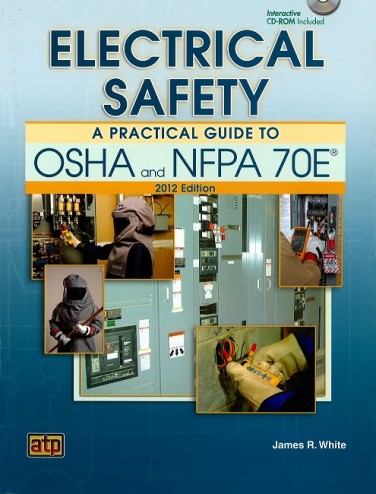
New Book Focuses On Electrical Saftey In The Workplace

A new book dedicated to electrical safety in the workplace has been released.

James R. White’s “Electrical Safety: A Practical Guide to OSHA and NFPA 70E” was published in early October, discussing the interaction between two closely related documents sharing a common history, OSHA Electrical Safety-Related Work Practices regulations and NFPA 70E.

A comprehensive overview of electrical safety in the workplace, White’s book helps readers become more familiar with the 2012 edition of NFPA 70E as he draws on many years of field experience with real-life incidents, outlining lessons learned and common errors witnessed.

Among the topics covered are electrical hazards and basic electrical safety concepts, electrical safety programs, multi-employer worksites, approach boundaries for shock and arc flash hazards, performing a hazard/rick analysis, training for qualified and unqualified workers, portable electrical tools and flexible cords, establishing an electrically safe work condition, choosing and inspecting personal protective equipment and guidelines for common electrical tasks.

The book is written as a course text with an instructor’s guide. A workbook is also available.

Source: http://powergenerationinc.com/new-book-focuses-on-electrical-saftey-in-the-workplace/

electricians general contractor

SolarCity Files For Sale Of Shares (IPO) — It’s A Solar Power INSTALLER

From a Forbes.com 10/5/12 post:

Solar installation startup SolarCity this afternoon filed with the SEC for a $201.25 million initial public offering. Goldman Sachs is leading the underwriting group, which also includes Credit Suisse, Bank of America/Merrill Lynch, Needham and Roth Capital.

The company plans to trade on the NASDAQ using the symbol SCTY.

For the six months ended June 30, the company reported revenue of $71.4 million, including $51.7 from solar energy systems sales, and the rest from operating leases. That’s up from $20.3 million in the comparable year-ago period. In the same period, the company lost $23.1 million. For all of 2011, SolarCity reported revenue of $59.6 million.

The largest investor in the company is noneother than Elon Musk, the CEO of both publicly held electric car maker Tesla Motors and still privately held rocket company SpaceX. He holds a 31.9% stake.

EleBlog downloaded the S-1 (“red herring”) statement from the SEC web site on SolarCity. It’s a 234-page PDF now, sitting on the computer desktop. To see it yourself, go here (it’s in HTML)

Source: http://electricalcontractor.com/?p=6637

master electricians electrical construction electrical works electrical repairs find a contractor

Save Money & Energy with SRP/APS Lighting Rebate Programs

ATS Electric has trained with SRP and APS on rebates for implementing energy saving technologies. The utility companies are really focusing on this issue as it reduces peak demand and the need for more power plants in the future. Simple lighting upgrades can receive a 30% rebate from the utility and coupled with the energy [...]

Source: http://blog.atselectricinc.com/2012/05/save-money-energy-with-srpaps-lighting-rebate-programs-2/

electrician jobs electrical installation

2015 Commodity Price Collapse?

That’s what Michael Pettis, who watches China, predicted recently (and provided some reasons for what he believes) — here on his blog.

Here’s the chilling segment for electrical folks (bolding by EleBlog):

This combination of factors – rising supply, dropping demand, and lots of inventory to work off – all but guarantee that the prices of hard commodities will collapse. I expect that certain commodities, like copper, will drop by 50% or more in the next two to three years.

Source: http://electricalcontractor.com/?p=6626

electrical job electrical tools electric work electrical services electrical parts

Electrician Services Questions

Has your home had a major addition or renovation?

Do your lights flicker or dim momentarily?

Do you hear crackling, sizzling, or buzzing from your outlets?

Do you have GFCI'S?


Source: http://cooper-electric.net/electrician-services-questions/

electrical parts home contractors

How Long To Grow Tomatoes – Juicy Delicious Tomatoes

Ketchup is just one by product that you can get from tomatoes. And the fresher it gets better it is. To give you freshly picked tomatoes, you might want to learn how to start growing them. But instead of just learning how long to grow tomatoes, it is ideal to learn the essentials on how to care for them as well. There are only a few rules to follow so better start learning them for you to reap the rewards of fresh harvest in no time.

Click Here For Juicy Delicious Tomatoes Instant Access Now!

As have said earlier, there are only a few basic steps in trying to grow your own tomatoes. And depending on how well you take each aspect in consideration, it will pretty much determine how long to grow tomatoes. You can always ask your neighbors if you seem to lack such information or you can find yourself a guide that you can now find online these days.

One of the things you might want to have in order to produce the best tomatoes is the proper lighting. As a matter of fact, the more you expose your crops to sunlight, the better they are going to get. However, make sure not to place them in a place where wind is abundant.

Another thing to consider is the soil you are planning to plant your tomatoes in. The best thing to do is to sterilize your soil from time to time. It is recommended to do so twice every season. What is important is that your soil is free from various infections or diseases that could affect your plants.

It is also important to keep your soil moist at most times. These are just some of the things to consider. Why learn how long to grow tomatoes if you could only learn the best ways to care for them instead. Doing so will surely get you there – an unlimited supply of fresh tomatoes.

Click Here For Juicy Delicious Tomatoes Instant Access Now!

-
About the Author:
This author writes about Tomato Planting Tips at Juicy Delicious Tomatoes
Article Source

share save 171 16 How Long To Grow Tomatoes   Juicy Delicious Tomatoes

Source: http://reschelectrical.com/how-long-to-grow-tomatoes-juicy-delicious-tomatoes/

what is an electrical contractor electrical service service electrical electrical jobs a electrical contractors

Saturday, October 27, 2012

Beware of Phony Electricians and Scams

Boca Raton ElectricianHiring an electrician means inviting someone into your property and allowing him to tinker with your wires and outlets. Faulty wiring can cause further headaches and costs in the future – or worse – it could set your house on fire. So when searching for an electrician, be sure to check for the following things:

  • License – Here at Southern Coast Electrical Services, we employ only fully licensed electricians who have passed our thorough background check. Our company is also accredited by the BBB, guaranteeing quality workmanship and professionalism.
  • Reviews – Look for reviews and never trust a company without any online presence. It’s the digital age –people quickly post warnings about scams; as well recommendations for good electricians. We even have testimonials from our customers who can vouch for our staff and service.
  • Emergency Service – Electrical problems may arise any time. This is why we have professional electricians in Miami and West Palm Beach on call 24 hours a day, 7 days a week, ready to rush and cater to your electrical needs.

When it comes to finding the most reliable electrician in South Florida, take the necessary precautions and choose an electrical services provider with fully licensed electricians, positive reviews and 24/7 emergency service.

Source: http://www.sflaelectrician.com/beware-of-phony-electricians-and-scams/?utm_source=rss&utm_medium=rss&utm_campaign=beware-of-phony-electricians-and-scams

construction electrical

Fort Lauderdale Electrical Contractor Explains Different Generator Options For Your Home

As a solution to the increasing frequency of power outages in the U.S., it would be best to install a home generator. The frequent power outages are partly due to the deteriorating power grid infrastructure and partly due to other causes such storms and bad weather. In order to function, electric generators employ the principle [...]

Source: http://www.perfectelectricrepairs.com/2012/fort-lauderdale-electrical-contractor-explain-different-generator-options-for-your-home.html?utm_source=rss&utm_medium=rss&utm_campaign=fort-lauderdale-electrical-contractor-explain-different-generator-options-for-your-home

electrician electricians general contractor electrical supply electrical engineer