Friday, November 30, 2012

West Coast Warnings...The Tale of Three Storms

Look out West Coast! If storm number one, that brought in high winds, flooding, downed power lines, and more devastating damage to the area wasn't bad enough, there are two more to follow that could last until Thanksgiving or beyond. Winds as high as 114 MPH, flooding rains, downed power lines, power outages, rain up to 7.9 inches, and snow prediction of up to 100 inches is possible with these storms. WOW! All I can say is read the rest of the article and be prepared for these storms...

Read Full Post

Source: http://electrical.about.com/b/2012/11/20/west-coast-warnings-the-tale-of-three-storms.htm

companies electrical electrical work

East Coast Cleanup...After the Floods

When flood waters suddenly inundate your home without warning, the damage can be catastrophic.  You're suddenly forced from your home because of rising water and many times, everything must be left behind.  Of course, you can't wait to get back into your home following the disaster.  As soon as the water stops rising and it begins to fall, you figure that it is now safe to go in and start evaluating the damage.  Not so fast!  There are plenty of hidden dangers that have to be thought out before entering your home.  Don't become a statistic by coming back home too soon!

...

Read Full Post

Source: http://electrical.about.com/b/2012/11/11/east-coast-cleanup-after-the-floods.htm

electrician work electrical training electrician apprenticeship electrician contractors electrical testing

Governors Demand Wind PTC to Cover State Costs

“The Governors know that the federal PTC disproportionately benefits States with renewable mandates by distributing the high cost of their policies to taxpayers at large. They also understand that eliminating the PTC will impose the full burden of costly renewable mandates squarely on the States who enacted them. If California, New York, and Minnesota mandate large wind development, it’s appropriate they bear the full cost of their energy choices.”

The United States is in the midst of a fiscal crisis. If Congress and the White House are unable to reach agreement on spending by January 1, crushing tax increases and draconian budget cuts will go into effect sending the country’s already weakened economy into another destructive recession.

Against this backdrop, the 23-member Governors’ Wind Energy Coalition put aside their own states’ $2+ trillion deficits[1] to deliver a message to Congress — extend the wind production tax credit (PTC).

The staged media event on Capitol Hill was a modern-day equivalent of Nero fiddling while Rome burned.

The Letter

In their letter, the governors acknowledge the wind industry is not yet competitive with other fuel sources but insist it will be “in the not-so-distant future.”

They tout job claims, and potential losses, based on American Wind Energy Association employment models, and underscore the impact of losing the PTC by listing recent layoffs in Colorado (182 Vestas workers), Iowa (407 Siemens workers) and Pennsylvania (165 Gamesa workers).

The governors are convinced the wind subsidy should be a top priority for the country ahead of our military and other bread-and-butter issues but are unaware, or don’t care, that American taxpayers are shouldering a large part of the cost.

Do they realize that by 2015, American taxpayers will have provided a cumulative $40 billion to the industrial wind energy industry in production tax credits and cash grants alone, the bulk of which will be distributed after 2010? Or that the open-ended subsidy of 2.2¢/kWh in after-tax income represents a pre-tax value (3.4¢/kWh) that’s equal to, or more than the wholesale price of power in many regions of the country?

Why the SOS?

Why would the Governors demand billions more for an industry that, after over 20 years, has failed to establish itself as a self-sustaining contributor to meeting our energy needs?

It’s no accident that all of the Governors who signed the letter hail from states with mandatory renewable portfolio standards (RPS) or from states adjacent to those with RPS policies.

State legislators who voted in favor of renewable mandates, did so after being convinced that adding alternative resources to the energy mix, particularly those with no fuel cost, would reduce fossil use, attract jobs and ultimately stabilize and lower energy prices. (Wind energy was seen by most as the dominant resource for meeting compliance.)

But they were wrong.

Researchers at the Lawrence Berkeley National Labs (LBNL) found that ‘Policy Impact’ studies relied on by the states tended to underestimate the effect of adding high-cost renewables on retail rates and all of them failed to anticipate the persistent low natural gas prices we enjoy today.

Seventy-percent of the RPS cost studies that were examined forecasted minimal retail electricity rate increases – no more than 1% – while a number predicted electricity consumers would experience a cost savings.

In fact, the artificial no-compete power markets created by RPS policies drove up electricity prices and forced consumers to pay for energy they didn’t need. In 2011 residential rates in states with mandates were 27% higher than those without mandates while industrial electricity prices were 23% higher.

The Governors know that the federal PTC disproportionately benefits States with renewable mandates by distributing the high cost of their policies to taxpayers at large. They also understand that eliminating the PTC will impose the full burden of costly renewable mandates squarely on the States who enacted them. If California, New York, and Minnesota mandate large wind development, it’s appropriate they bear the full cost of their energy choices.

Iowa is an exception. Its capacity-based RPS was satisfied years ago with the installation of just 105 megawatts of wind capacity, leaving the state’s two investor-owned utilities, including Warren Buffett’s MidAmerican Energy, at liberty to sell most of their wind power to neighboring states — which they do at prices significantly above market.

According to Mark Glaess, executive director of the Minnesota Rural Electric Association, which represents about 50 small utilities serving about 650,000 rural residents, its members lost more than $70 million in 2011 because of the high cost of wind power. “Right now we’re paying for wind power we don’t need, we can’t use and can’t sell,” he said.

Expiration Is a Compromise

The production tax credit, which turns twenty years old this year, serves little purpose today other than to line the pockets of project owners and tax-advantaged investors and artificially mask the true price of wind power.

If the PTC were to expire, REC prices in states with RPS policies would likely go up for a while until the industry can implement necessary cost-cutting measures. States will respond by reexamining ways to rein-in RPS-related energy costs. We will also likely see the industry shift their business plans away from those based on tax avoidance to plans based on energy production – as they should be. American taxpayers and ratepayers would be best served by letting the PTC expire.

The Governors’ self-serving pleas aside, there is no justification for wind projects eligible under any State RPS programs to receive the benefit of BOTH the State policies and the PTC wealth transfer from taxpayers. Congress has a responsibility to say NO.

_______________________________

[1] The 23-member Governors oversee states with a combined aggregate debt of more than $2 trillion for fiscal year 2011 including California and New York representing total debt of nearly $1 trillion.

Source: http://www.masterresource.org/2012/11/governors-ptc-cost-extension/

electrical contractors electric services

How Long To Grow Tomatoes – Juicy Delicious Tomatoes

Ketchup is just one by product that you can get from tomatoes. And the fresher it gets better it is. To give you freshly picked tomatoes, you might want to learn how to start growing them. But instead of just learning how long to grow tomatoes, it is ideal to learn the essentials on how to care for them as well. There are only a few rules to follow so better start learning them for you to reap the rewards of fresh harvest in no time.

Click Here For Juicy Delicious Tomatoes Instant Access Now!

As have said earlier, there are only a few basic steps in trying to grow your own tomatoes. And depending on how well you take each aspect in consideration, it will pretty much determine how long to grow tomatoes. You can always ask your neighbors if you seem to lack such information or you can find yourself a guide that you can now find online these days.

One of the things you might want to have in order to produce the best tomatoes is the proper lighting. As a matter of fact, the more you expose your crops to sunlight, the better they are going to get. However, make sure not to place them in a place where wind is abundant.

Another thing to consider is the soil you are planning to plant your tomatoes in. The best thing to do is to sterilize your soil from time to time. It is recommended to do so twice every season. What is important is that your soil is free from various infections or diseases that could affect your plants.

It is also important to keep your soil moist at most times. These are just some of the things to consider. Why learn how long to grow tomatoes if you could only learn the best ways to care for them instead. Doing so will surely get you there – an unlimited supply of fresh tomatoes.

Click Here For Juicy Delicious Tomatoes Instant Access Now!

-
About the Author:
This author writes about Tomato Planting Tips at Juicy Delicious Tomatoes
Article Source

share save 171 16 How Long To Grow Tomatoes   Juicy Delicious Tomatoes

Source: http://reschelectrical.com/how-long-to-grow-tomatoes-juicy-delicious-tomatoes/

contractors electrician in electrician electricians general contractor

Alliance for Wise Energy Decisions: Recent Newsletter

The Alliance for Wise Energy Decisions (AWED) is an informal coalition of individuals and organizations who are interested in improving national. state and local energy & environmental policies. Our basic position is that: 1) we do have energy and environmental issues, and 2) these technical matters should be resolved by using genuine science.

Instead our energy and environmental policies have essentially being written by those who stand to economically or politically profit from them. As a result of our current methodology, anything genuinely science-based in these policies is usually inadvertent and accidental.

A key element of AWED’s efforts is to educate the public. Towards that end we send out a newsletter every 2-3 weeks, and this attempts to put some balance into what the mainstream media is conveying about energy and environmental matters. The newsletter readership is now about 10,000.

Below is a sample newsletter that combines parts of the two most recent issues.

Since there was a national interview with AWED’s Dr. George Taylor on the US Weather Channel (re the PTC), I thought it would be appropriate to remind you of some turbine-weather related studies that apply in any country.

There have been several investigations done by independent scientists that have concluded that wind projects will have an affect (typically negative: like lower humidity) on local meteorological conditions — for as much as fifteen miles away! This is yet another unaccounted wind cost.

Here is one such study (University of Illinois), and a second on a different aspect, a third (George Mason University), a fourth (six PhDs, different schools), a fifth (seven PhDs, multiple institutions), and a sixth (MIT). Even offshore wind gets into the picture.

———

Two really important stories about Britain apparently coming to their senses regarding wind energy: here and here. Pass these on to your local, state and federal representatives about the writing on the wall — and also to those who say we should be following Europe’s lead.

———

The video of the interesting Epstein-McKibben energy debate at Duke University is here.

More reports about greed energy economics:

More evidence of wind energy’s negative pricing.

When there are utility handouts, keep this in mind.

Little-Known Filth Fouls Clean Energy, Costing Trillions

Green Energy Policy Hurts America

A fine speech at Google about why renewables are an illusion.

This Wind Intermittency Report pertains to such matters as the PTC.

A new study about real estate values changes due to turbines.

Wind cost predictions not being borne out by reality.

A new study concluding that a state RPS (Missouri) is an economics loser.

A list of some failed US taxpayer subsidized renewable investments.

The EPA officially acknowledges that they have no way to accurately calculate the costs or savings from their rules and regulations…

More reports about turbine health matters:

Protestors will be suffocated by low frequency sound machine — wait, that’s what turbines generate!

New peer reviewed study links turbines and ill health.

A superior interview about turbines with medical expert Dr. Carl Phillips.

A Danish report about wind turbine noise reality.

———————

More reports about turbine wildlife matters:

Changes requested at America’s most deadly wildlife wind project.

Two articles about bats and wind turbines: here and here.

Expert warns of avian population collapse.

————–

Miscellaneous energy reports:

A VERY powerful article about the moral and legal corruption in Denmark with regards to wind energy — written by a retired High Court judge!

More commentary on Britain’s newfound sensibility

What AWEA Doesn’t Want You to Know about Wind Energy.

Maine agency rejects wind development due to view impact

CFACT’s Energy Truth Filehas many good observations

An excellent article on wind NIMBYism.

A superb TED video about medical fraud — that also applies to alternative energy, global warming, sea level rise, etc.

Why Are Environmentalists Taking Anti-Science Positions?

More problem with German wind energy.

Some recent global warming articles of interest —

New studies about the global temps at earlier time periods.

Earth’s Energy Balance the Models are Wrong.

Very well written article about the Antarctic and global warming.

A scientific study of the accuracy of temperature measurements — which comes up with surprising (or not) results.

CFACT’s Climate Change Truth File has some good commentary.

Government funded AGW computer models continue abysmal performance.

Media duped by global warming polls.

If you (or some open-minded, science-oriented person you know) would like to get these free periodic newsletters, send me an email.

Source: http://www.masterresource.org/2012/11/alliance-for-wise-energy-decisions-newsletter-update/

electric services electrical companies

Texas Windpower: Will Negative Pricing Blow Out the Lights? (PTC vs. reliable new capacity)

“It is well known that Texas is undergoing a major challenge in maintaining resource adequacy due to improper price signals; less well known is that a significant portion of the problem can be laid directly on the doorstep of subsidies for wind generation.”

The federal Production Tax Credit (PTC), which currently provides a $0.022/kWh subsidy to qualifying renewables, is set to expire at year-end. Just the prospect of expiration has dramatically slowed new construction of industrial wind capacity, despite a raft of other subsidies to politically correct energy. [1]

The Texas Public Policy Foundation has released a new paper looking at the effect of the production tax credit both on taxpayers and consumers. Bill Peacock and I found that PTC continuance puts the Texas electricity market at increased risk of price spikes and blackout by discouraging the construction of new reliable, on-peak generating capacity.

Texans are not only paying for the PTC’s direct annual cost of $622 million; they could pay billions of dollars more from forgone capacity given negative pricing where wind producers generate unneeded electricity just to pocket tax credits.

Background

It is well known that Texas is undergoing a major challenge in maintaining resource adequacy due to improper price signals; less well known is that a significant portion of the problem can be laid directly on the doorstep of subsidies for wind generation.

When wind is bid into the market at a negative price, superior forms of generation must match that price or risk getting knocked off the grid. This decreases the profitability of non-wind generation and makes companies less likely to invest in new capacity. This has already degraded Texas’s resource adequacy, and it could get worse before it gets better. This increases the risk of blackouts if unusual events reduce capacity and/or increase demand.

Donna Nelson, chairman of the Public Utility Commission of Texas (PUC) explains this well:

Federal incentives for renewable energy… have distorted the competitive wholesale market in ERCOT. Wind has been supported by a federal production tax credit that provides $22 per MWh of energy generated by a wind resource. With this substantial incentive, wind resources can actually bid negative prices into the market and still make a profit.

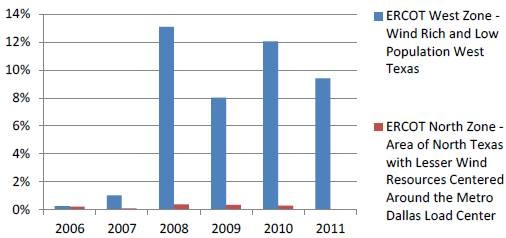
We’ve seen a number of days with a negative clearing price in the west zone of ERCOT where most of the wind resources are installed…. The market distortions caused by renewable energy incentives are one of the primary causes I believe of our current resource adequacy issue… [T]his distortion makes it difficult for other generation types to recover their cost and discourages investment in new generation.

The Northbridge Group recently published a study confirming the distortions in the market caused by the PTC. Northbridge found that the five-fold increase in wind generation since 2006 parallels the increase in negative pricing. In ERCOT, negative pricing occurred between 8 percent and 13 percent of the time from 2008 to 2011.

Percentage of Hours with Negative Real-Time Electric Energy Prices in ERCOT, 2006-11

clip_image002

Source: The Northbridge Group

The disruption of the Texas electrical market by negative wind prices is only going to get worse as more renewable-specific transmission lines are built, and as the frequency of negative pricing in new parts of the state comes to resemble the West Zone.

As another recent report by the Brattle Group noted:

Wind generation puts downward pressure on energy prices in all parts of ERCOT whenever the wind blows. However, the effect is greatest in the West Zone, where more than 70% of ERCOT’s wind capacity is located…

The CREZ project is primarily designed to move electricity generated by wind and other renewable resources from remote parts of Texas (i.e., West Texas and the Texas Panhandle) to the more heavily-populated areas of Texas (e.g., Austin, Dallas-Fort Worth, and San Antonio). This transmission expansion will also increase Texas’s ability to build more wind generation, but may in the future erode non-wind generator economics more by depressing energy prices in the other three zones.

The Real Cost of Wind

It is difficult to quantify the cost of the PTC’s distortions on the market, though the Foundation will address this issue more fully in an upcoming paper. But one method of doing so would be of looking at the cost of solving Texas’ resource adequacy challenges.

PUC Commissioner Ken Anderson recently did some “back of the envelope” calculations of the cost of imposing a PJM-style capacity market on ERCOT. He came up with a cost of over $3.6 billion per year. The portion of this cost that can be attributed to renewable energy subsidies is debatable, but these costs could easily exceed the costs of the direct subsidies, more than doubling the costs on consumers.

At a bare minimum, renewables energy subsidies in Texas are costing more than half a billion a year. Because of the PTC’s per megawatt hour subsidy, it causes substantially more distortion to the market than other renewable subsidies.

A credible case could be made that the PTC is more responsible than any other factor in causing ERCOT’s resource adequacy challenges and thus driving Texas toward some kind of forward capacity market.

Conclusion

Competition is working in the Texas electricity market. It is government interference with the market—led by the PTC—that is causing the current reliability challenges.

Texas need not abandon wholesale competition and move toward a capacity market. But this will be difficult to avoid as long as the PTC is in place. Congress should allow the PTC to expire; if not, we may see the end Texas’ world-class energy-only electricity market.

—————-

[1] The PTC is only one of the subsidies available to renewable energy producers in Texas. Others available in Texas include Renewable Energy Credits (RECs) under the state’s Renewable Portfolio Standard, federal grants under the 2009 stimulus bill, and access to transmission through the Competitive Renewable Energy Zone (CREZ) program. Altogether, renewable energy subsidies in Texas, including PTC, will cost taxpayers and consumers about $12.9 billion over the same period.

———-

Josiah Neeley is a policy analyst for the Armstrong Center for Energy & the Environment at the Texas Public Policy Foundation, a non-profit, free-market research institute based in Austin. Bill Peacock, coauthor of this post, is the Vice President for Research and Director for the Center for Economic Freedom at the TPPF.

Source: http://www.masterresource.org/2012/11/texas-negative-pricing-ptc/

electrical estimating licensed electricians residential electrician electrician company electrician tools

Electrician Santa Monica – What Are Electrical Circuits?

An electrical circuit is the necessary pathway required to provide power to your appliances, gadgets and electronics. Each circuit is a closed loop system that is formed by wires, a power source, load, a switch and some sort of circuit protection. The electricity flows from the power source, into the circuit and ultimately into the object that it is plugged into. After the electricity has provided the necessary power to the device, it then flows back to the original electrical source, allowing the circuit to keep the electrical current flowing in a smooth manner. There are three different types of electrical circuits: the parallel circuit, the series circuit and the series-parallel circuit.

How Do They Work?

An electrician in Santa Monica installs an electrical panel that is then broken into several circuits that provide power to your home. Whenever you plug a device into an electrical outlet, or flip a switch, you are accessing electricity that is flowing through that particular circuit. By plugging in or flipping a switch, you are essentially completing the circuit. This allows power to flow freely from the positive terminal of the power source, through the wire, and back to the negative terminal. This allows us to provide on-demand electricity to our light bulbs, televisions, appliances and other electronics.

Types of Circuits

The simplest type of circuit is the series circuit, because it provides only one possible path for electrical current. If this circuit is broken at any point along this path, none of the devices on the circuit will work. A parallel circuit, on the other hand, contains more than one path for electrical current. If one of the paths is broken, electricity can still flow to other portions of the circuit. A series-parallel circuit combines these two circuit types. Some portions of the circuit are parallel, and some are attached in series. If one of the series circuits breaks, it will shut off power to anything in that circuit. If a parallel circuit breaks, all other parallel circuits will continue to function as normal.

As an electrician Santa Monica, The Electric Connection installs and maintains electrical circuits on a daily basis. For more information, or questions about our services, visit our main website at www.theelectricconnection.com/electrician-santa-monica-ca.

Source: http://www.theelectricconnection.com/electrician-santa-monica-electrical-circuits/

electrical construction electrical works

How Long To Grow Tomatoes – Juicy Delicious Tomatoes

Ketchup is just one by product that you can get from tomatoes. And the fresher it gets better it is. To give you freshly picked tomatoes, you might want to learn how to start growing them. But instead of just learning how long to grow tomatoes, it is ideal to learn the essentials on how to care for them as well. There are only a few rules to follow so better start learning them for you to reap the rewards of fresh harvest in no time.

Click Here For Juicy Delicious Tomatoes Instant Access Now!

As have said earlier, there are only a few basic steps in trying to grow your own tomatoes. And depending on how well you take each aspect in consideration, it will pretty much determine how long to grow tomatoes. You can always ask your neighbors if you seem to lack such information or you can find yourself a guide that you can now find online these days.

One of the things you might want to have in order to produce the best tomatoes is the proper lighting. As a matter of fact, the more you expose your crops to sunlight, the better they are going to get. However, make sure not to place them in a place where wind is abundant.

Another thing to consider is the soil you are planning to plant your tomatoes in. The best thing to do is to sterilize your soil from time to time. It is recommended to do so twice every season. What is important is that your soil is free from various infections or diseases that could affect your plants.

It is also important to keep your soil moist at most times. These are just some of the things to consider. Why learn how long to grow tomatoes if you could only learn the best ways to care for them instead. Doing so will surely get you there – an unlimited supply of fresh tomatoes.

Click Here For Juicy Delicious Tomatoes Instant Access Now!

-
About the Author:
This author writes about Tomato Planting Tips at Juicy Delicious Tomatoes
Article Source

share save 171 16 How Long To Grow Tomatoes   Juicy Delicious Tomatoes

Source: http://reschelectrical.com/how-long-to-grow-tomatoes-juicy-delicious-tomatoes/

licensed electricians residential electrician electrician company electrician tools electrician commercial

Thursday, November 29, 2012

Los Angeles Electrician Explains About Chemicals Families are Potentially Exposed to During Home Renovations

Brian Turner asked me if I would post this article and I said yes, so here it is:

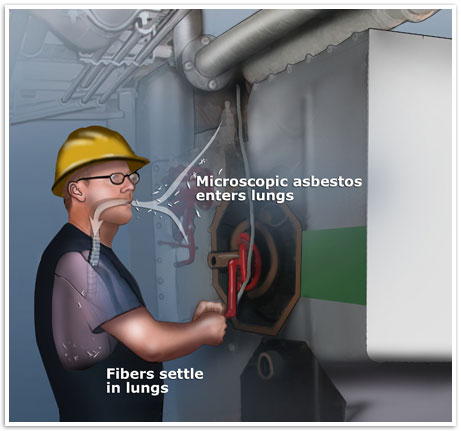
Renovations present a two fold risk to exposing families to potentially dangerous chemicals. First, the demolition of what is being replaced during renovations can release dust, mold and other allergy causing particulates in the air. It can also release asbestos fibers. Asbestos can be found in older tile flooring, ceiling and roof materials, exterior siding, covering pipes and pretty much anywhere else since it used to be widely used. It is associated with mesothelioma cancer.

The new materials being installed will put off volatile organic compounds (VOCs) to one degree or another in the form of gases. New furnishings, cabinets, flooring and other renovation products and materials can release gases such as formaldehyde and benzene. The EPA warns of VOC side effects that include coughing, wheezing, sneezing, burning throats and eyes and skin reactions. Exposure is also associated with long-term systemic effects such as liver and kidney disease.

There are different ways to control exposure. One is to choose a contractor with experience in reducing the amount of particulates that get into the air during the demolition phase. If asbestos is known to be present or discovered, a professional asbestos remediation team should remove the materials. There are also contractors who are aware of ways to control exposure to VOCs released by new furnishings and construction materials.

Most people associate that odor of newness that new products have as being a good thing. However, the very presence of the odor is an indication that the product is off-gassing something. The odor may be something that triggers a severe asthma attack in a susceptible person. It may end up causing harm in the long run. The way to know is to become an informed consumer.

Contact each and every manufacturer of every product and material being used in the renovation of the home. Ask questions about risks of having or using the product in the home. It may be a real eye-opener to some people when they find out the answers. Ask the contractor to save every scrap of paper included with the packaging of the new items being installed. Products do come with warnings about VOCs, yet many homeowners never see the warnings.

The state of California is rigid when it comes to warnings about consumer products. However, it is just a warning. People can still choose to install products that put off more VOCs or worse yet, release lead and other toxic and even cancer causing substances. Though no option in new renovations is perfect, there are choices that can be made between product types to reduce the amount of dangerous chemicals and substances released in a home during renovations.

It takes time to do some research before buying that new set of kitchen cabinets or picking that new carpeting for the living room, but it is worth it. With indoor air being the air most families breathe the most of, it makes sense to take precautions to make it as clean and pure as possible for your entire family.


Source: http://www.theelectricconnection.com/los-angeles-electrician-explains-chemicals-families-potentially-exposed-home-renovations/

electrician contractor contractor electrician

Electrician Talks About Commercial Electrical Work – Commercial Electrician South Florida

Several electrical appliances and lighting are constantly in use at any one time in homes and offices. Interruptions with electricity supply due to faulty wiring or other problems can therefore cause a lot of inconvenience. In an office, it can cause things to grind to a halt.  This is why it is important to hire  [...]

Source: http://www.perfectelectricrepairs.com/2012/electrician-talks-about-commercial-electrical-work-commercial-electrician-south-florida.html?utm_source=rss&utm_medium=rss&utm_campaign=electrician-talks-about-commercial-electrical-work-commercial-electrician-south-florida

commercial electric electric contractor contractor electric electrician job electricians jobs

Is Solar Right for Your Home?

Putting a solar array on your home can be quite an expensive up front cost. This is why people like me and groups like the Nevada Clean Energy Project (CEP) are working to get Public Utilities Commission (PUC) and our representatives in Carson City and Washington DC to provide more incentives and possibly even low [...]

Source: http://www.enlighten-electric.com/2012/02/solar-right-4-home/

electrical contractors company certified electrician

Thanksgiving Turkey Cooking Safety

Hot oil and open flames combine to cause fires and a disaster for your holiday mealtime at Thanksgiving. Ah, but I'll agree, there is nothing better than a fast-roasted turkey in the hot oil fryer that locks in the natural juices of the turkey and makes it mouth-watering good! That's the good news, but when we see houses and garages on fire due to a turkey-cooking incodent, that's where this article comes into play. Before you cook, read about Thanksgiving trukey Safety.

...

Read Full Post

Source: http://electrical.about.com/b/2012/11/17/thanksgiving-turkey-cooking-safety.htm

electrical supply electrical engineer electrical wiring electrical company electrical supplies

How to Cut Your Electric Bill in NJ

Electric Bill

One of the major concerns in the world today is depletion of energy. As concerned citizens all of us must make a concerted effort to be conscious citizens and save on our electric bill in NJ. Electricity has become integral to life but imagine having to live without power.

Conservation of electricity benefits you personally as you will cut your electric bill. Consider:

1.    Doing an energy audit. This will tell you how and when you use energy and where the wastage lies. You will be able to make an “energy savings plan” by pinpointing exactly how you can cut back on energy consumption. Some ideas may be as simple as don’t leave the coffee machine on at all times.

2.    Think about resetting the thermostat ten degrees lower during the night. If you can do this for say approximately eight hours a day you will save 10% on electricity without sacrificing comfort. Insulate the home in winter by drawing shut the drapes.

3.    Check all insulation in the house. If you increase attic insulation to around 12 inches the electricity consumption will reduce by 20 percent.

4.    Plant more trees around the house these will cool the house in summer and insulate the house in winter. Studies show that a green cover benefits in many ways.

5.    Have all electricity wires and outlets checked for leakage. Check all fuses and appliances.

6.    Fluorescent light bulbs are energy efficient. They use 75% less energy than ordinary light bulbs, this will definitely help cut your electric bill.  These have a longer life and contribute to great savings.

7.    Use energy efficient appliances. These use less energy and believe it or not a high efficiency refrigerator uses less electricity than a light bulb.

8.    When you are away even for a few hours or days you should turn off and unplug   all electrical appliances and turn settings on the thermostat, water heater, and refrigerator to the lowest setting.

9.    Ensure that you use a water-saving shower head. Water heating costs for a family can be lowered by at least US$ 250 a year.

10.    Weatherize your home. This helps reduce heating bills by 20% and cooling by at least 10 percent. Even when building a home or decorating it use weather friendly materials—those that are not good conductors of heat and cold. Install windows and glass panes in the roof in such away that you use sunlight to light up the rooms during day light hours. Make an effort to switch off lights and fans when leaving a room. Ensure that the filters in air conditioners and heaters are always cleaned and free of clog and dust.

If you live an energy efficient lifestyle you will see the numbers on the energy bill actually reducing. The power to cut energy costs is well within your control. It is as simple as only washing full loads and that to in cold water. Use the hot wash option only for very dirty clothes.  Cook food only just before you are ready to eat that way you can save reheating costs as well as refrigerating costs of storing the food. Turn the thermostat of the refrigerator to minimum in cold or cool weather. Switch off freezers if they are not in use. Small contributions can all add up to significant amounts of power saved. And, power saved means money in the bank.

Electric Bill

share save 171 16 How to Cut Your Electric Bill in NJ

Source: http://reschelectrical.com/how-to-cut-your-electric-bill-in-nj/

what is an electrical contractor electrical service

All You Need Is Love . . .

. . . and an electrical contractor. At least, that 2nd part is what this 10/14/12 story in a Cedar Rapids newspaper leads you to think:

All you need to help keep your business and home secure is a smartphone and a few thousand dollars — and perhaps a lighting contractor to set it up for you.

From Nick Streff, Streff Electric:

“We’ve done a dozen of these in last few years for high-end homes and custom homes. It’s an app on the phone — and involves a wireless transmitter that can be controlled with the phone. The cost is several thousand dollars.”

Folks from Paulson Electric and Duball Electric are also quoted in the piece.

Source: http://electricalcontractor.com/?p=7150

electrical electrical how to contractor contractors electrician in

The End of Incandescent Light Bulbs

There have been many articles in electrical trade magazines lately that have discussed the future inevitable ban of the old standard incandescent light bulb. California usually leads the nation in energy conservation trends and discussions there are leaning towards an all out ban by 2012. Many of you are probably using fluorescent replacement lamps in [...]

Source: http://blog.atselectricinc.com/2012/08/the-end-of-incandescent-light-bulbs-8/

electrician company electrician tools

Commercial Electric’s T91 retrofit recess/new construction LED wows

At $36 from Home Depot, the new T91 recess trim retrofit / new construction surface mount meniscus LED fixture from Commercial Electric is a 750 lumen powerhouse with color temperature that actually looks good. And although 750 lumens will be too much in many applications, this unit is dimmable, making it a superior option to retrofitting PAR lamps in recess lights — or to recess lights at all!

T91 multi-purpose LED fixture from Commercial ElectricThe T91 is a multi-application new- and old-work installation fixture adaptable to standard new (or old work) 4″ plastic round boxes as well as 5″ or 6″ recess housings that use a standard Edison E61 base screw-in lamp.

New Work Installation in a 4″ Plastic Box

Sized to install as a semi-recessed surface-mount fixture in new construction 4″ round wiring boxes, the T91′s low meniscus profile of under 1″ below finish ceiling will make it a game-changer for electricians wanting to provide modern lighting styles without compromising the weatherseal around conditioned space by use of a recess can. By coombining the T91 with the new gasketed 4″ round box from Arlington, this fixture is a labor-saving draft-killer promising simple installations and a clean minimalist styling.


On the downside, it sits proud of the finish surface and casts light in a 120 to 180 degree spread, so it lacks the glare-reducing properties of well-installed recessed task lighting.

Commercial Electric T91 offers versatile installation and draft-free semi recess styling. T91 multi-purpose LED fixture from Commercial Electric Installing the T91 LED: leads Preparing for installation of the T91 LED fixture T91 installation: installing the mounting bracket on a 4" fixture box T91 installation: connecting fixture to leads IMG_0640 T91 installation: align bracket mounting screw through keyhole slots T91 installation: mounted and ready for final trim T91 installation: installing trim collar Five 750 lumen dimmable T91 points are about the wattage of one conventional halogen
Five 750 lumen dimmable T91 points are about the wattage of one conventional halogen

Five 750 lumen dimmable T91 points are about the wattage of one conventional halogen

Commercial Electric T91 offers versatile installation and draft-free semi recess styling.

Licensed Electrician Robert Monk Commercial Electric’s T91 retrofit recess/new construction LED wows Copyright Robert Monk, 2012

Source: http://www.phillylicensedelectrician.com/commercial-electrics-t91-retrofit-recessnew-construction-led-wows/

electrical training electrician apprenticeship electrician contractors electrical testing commercial electrical

Wednesday, November 28, 2012

Smoke Detectors

In most cases you have less than five minutes to escape in a house fire which is why being alerted immediately is important. Smoke detectors should be placed in every bedroom, every common hallway and in any change of ceiling height greater than 12 inches. Batteries should be checked monthly and changed often. Lithium batteries, [...]

Source: http://blog.atselectricinc.com/2012/07/smoke-detectors-6/

electrician jobs electrical installation

Santa Monica Electrician – Hiring an Emergency Electrician

Something could go wrong with your electrical system at any time. Whether you experience an issue with your wiring system, or an error that has occurred as a result of an appliance or other gadget, it is important to leave these important repairs to a professional. Rather than risking your life trying to fix a complex electrical issue on your own, you should take full advantage of the 24/7 emergency electrical services in your area. Most electricians, including The Electric Connection, offer emergency service 24 hours a day, 7 days a week.

You may need to call on an electrician in Santa Monica at odd hours for a variety of reasons. Natural disasters, poor wiring, overloaded circuits or appliance malfunctions are some of the most common reasons that electrical systems stop working properly. In certain circumstances, these events can make your home and electrical system unsafe until an electrician has solved the problem. In other emergency events, loss of power could lead to a potentially dangerous or uncomfortable situation, depending on the weather and special considerations such as medical equipment and food storage. If you feel that your electrical issue is an emergency, don’t hesitate to call your Santa Monica Electrician.

While you may be somewhat apprehensive at first, hiring an emergency electrician is normally just as easy as hiring one during normal hours. Simply call the office, or a special 24/7 emergency line, and describe your problem. Before you know it, someone will be out to inspect and fix your electrical system. While you are waiting, resist the urge to tinker with the electronics yourself. Doing so could lead to further damage or even injury. For fast, certified and professional emergency services, don’t hesitate to call The Electric Connection. We’re always available to help out during an electrical emergency.

Source: http://www.theelectricconnection.com/santa-monica-electrician-hiring-emergency-electrician/

able electric auto electrical repair construction electrical electrical how to

Contemporary Modern Lighting Illuminates Any Home

Decorating your home can be quite a challenge if you are not up to the task. You need to decide on the color that you want for your walls. You need to consider the tiles you will put on the floor. You also have to give some thought to the lighting fixtures you will have installed. Given that every decision you make is vital in giving you the design of your home that you desire, the number of contemporary modern lighting fixtures available is enough to confuse anyone in their quest to make the right decision.

Of course, you will find that your tastes and personal preferences will naturally come into play. Then there is also the issue of the current design or style of your home. In short, zeroing on the exact style that you want for your interiors is difficult enough. How much more could finding the right contemporary modern lighting fixture be? It sure does not help that today’s contemporary modern lighting fixtures comes in a wide variety of shapes and colors. Nevertheless, putting all that difficulty aside, you just need to read this article so that you can get a few ideas that will enlighten you (pun intended) regarding all the ways you can light up your home.

So, how do you pick the right contemporary modern lighting fixture for your home? the following are some helpful hints which you can use.

- Floor lamps 
Modern homes can benefit from contemporary floor lamps. These floor lamps are made from different materials – wood, metal and combinations of both. If you want something interesting, you can go for those with unusual yet attractive designs. Just be sure to pick floor lamps that go well with the other pieces that are present in the room. Dare to be creative? Pick floor lamps with bold colors. They will surely provide illumination as well as liven up your room.

- Side lamps 
For lamps to adorn side tables, you can opt for contemporary side lamps. These lighting solutions can give an otherwise drab room a dash of color. Of course, when you want some vibrancy in the room, you have to choose acrylic side lamps that come in different shades – blue, red, pink, orange, purple, and loads more! Then there are chrome side lamps that go well with chrome furniture. If you are not one to experiment, you can pick side lamps with wooden designs. These go well with wooden furnishings.

- Chandeliers and ceiling lights 
There are now more options to choose from when it comes to chandeliers and ceiling lights. You can take your pick from different designs to complement the room you intend to install a chandelier in. Plus, your room can get a whole new look when you pick interesting ceiling lights to give you the illumination you need.

Source: http://www.accurateelectricalservices.com/CA-Electrician/lighting/contemporary-modern-lighting-illuminates-home

electrician in electrician

LED Lighting For Your Laundry Room

Getting the most out of your laundry room starts with the right lighting fixtures from your Pasadena lighting contractor. Without the right lighting in your laundry room, you might as well be doing your laundry in the closet. Conventional lighting can be too hot for an already warm space. Florescent bulbs tend to make a room feel like your cleaning clothes at the DMV. Use this guide to lighting with LED bulbs and you can be sure your mud room will be well lit for an affordable price.

LED Track Lighting

For laundry spaces that need a bright light source, LED track fixtures can be the source that you need to light your washer, dryer and folding area with one simple switch. LED’s are easy to install over existing fixtures. Attach these fantastic laundry lights to a dimmer switch and you can keep the lights low for when you leave the room and turn them on bright when you need to fold the clothes.

Under cabinet Lighting

Many mud rooms have cabinets above the washer, dryer, lavatory or laundry folding area. These are excellent areas for installing under cabinet lights. LED under cabinet systems are easy to install and work well with most hanging cabinet styles. When installing under cabinet LED’s, it’s a good idea to space them apart about two feet for optimal light displacement. Rope lights are also another style of under cabinet lighting that works great in laundry room areas and can provide your laundry space with a continuous ambient light source under the cabinets.

Recessed Lights

A recessed fixture is commonly employed over the top of each laundry appliance and counter space facing directly down onto the surface. These flush ceiling LED fixtures are fantastic ways to keep your laundry room well lit without the need for exposed fixtures. Recessed lighting comes in various styles but LED recessed lighting works particularly better than a conventional can light in many ways. LED recessed lights are much smaller, yet yield more lumens per watt. Since they produce little heat, they can be installed in areas where conventional recessed lighting cannot. They also use significantly less energy making them a great addition to any mud room.


Source: http://www.accurateelectricalservices.com/CA-Electrician/lighting/led-lighting-laundry-room

electrical inspection electrical maintenance electrician certification electrical contracting contracting electrical

Infrared Inspecting New Equipment

WHY BRAND NEW INSTALLATIONS NEED TO BE THERMALLY INSPECTED

    • New Installation Thermo PDF
    • Thermography Inspection Performed on December 14th 2011
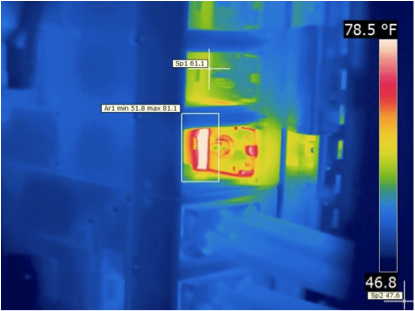
    • The Image is of a “Factory Installed” Bus Connection from the 3,000 amp vertical bus to the primary side of an 800 amp distribution circuit breaker.
BusConnection BlueField 225x300 Infrared Inspecting New Equipment
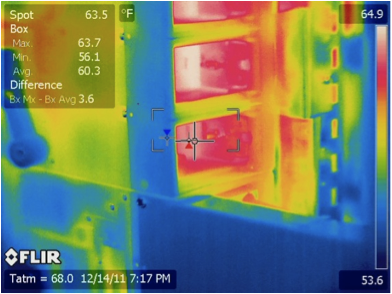
    • This temperature abnormality was found during the Thermography inspection on phase c of the newly installed GE switchgear. The temperature difference between phase C and phase B is 20 degrees ferenheight (Image #2). The breaker was aproximatley 30% loaded at the time of inspection (phase C-278amps phase B- 284amps). After removing the factory installed GE circuit breaker we found that the insulation tape had overlapped and restricted the current flow from the main bussway in the gear to the circuit breaker lug (Image #1).
BusConnection Abnormal 300x224 Infrared Inspecting New Equipment
    • The repair was made and the tape was properly removed from the switch gear (Image #3). A re-scan was perfomed on the circuit breaker (Image #4) and phase c was actually running 2 degrees cooler than phase b.
BusConnection Fixed 224x300 Infrared Inspecting New Equipment BusConnection Normal 300x225 Infrared Inspecting New Equipment

Source: http://cooper-electric.net/infrared-inspecting-new-equipment/

contractors electrical electrical contractors in

‘Imagine’ A New York World of Hydraulic Fracturing (and economical clean energy, sustainable jobs)

In recent months, the state of New York has been a focal point in the broader public debate over hydraulic fracturing. Activists in the state have teamed with musicians (in the loosest possible definition of the term) and Los Angeles movie stars to try to block shale development from occurring.

Hollywood’s finest, including Robert Redford and airline aficionado Alec Baldwin, as well as celebrities like meat-suit-wearing Lady Gaga have expended great effort in trying to undermine scientific conclusions about the safety of hydraulic fracturing.

Meanwhile, unemployment remains unacceptably high in the areas of upstate New York where prospective natural gas development would be located. So, it was with perhaps little surprise that when the voters in the Southern Tier had their say at the ballot box last week, they sent a clear message that they’ve had enough of “artists” telling them how to live their lives.

As the Associated Press reported, candidates opposing hydraulic fracturing “were beaten up and down the ballot after intense campaigns, some of which were framed as referendums on shale gas development.”

Translation: bring all the tambourines and celebrity star power you want, but facts will win the day, and the people have spoken.

Not to be rebuffed by democracy, “Artists Against Fracking” founders Yoko Ono and Sean Ono Lennon – best known for breaking up the Beatles and, well, being the son of the lady who broke up the Beatles, respectively – have paid for a huge billboard that says “Imagine There’s No Fracking.” Naturally, the sign is in New York City, far away from both where development will actually occur and the people who voted overwhelmingly in favor of such development.

Artists Against Fracking

The group claims that the billboard was placed on a route that Andrew Cuomo frequently travels, meaning they’re clearly trying to tell the governor to ignore the voters and ban hydraulic fracturing. To be fair, they could have put the billboard in Elmira or Horseheads or anywhere else in the Southern Tier, but after the thumping that opponents of responsible natural gas development took at the polls, it’s probably for the best that they kept their toxic message far away from the people it would most severely impact.

What Yoko, Sean, Ms. Gaga, Jack Donaghy, and the countless other wannabe “experts” don’t understand is that in upstate New York, people don’t have to “imagine” anything. There’s effectively been a moratorium on hydraulic fracturing since 2008 throughout the state. The lack of jobs (unemployment in the Southern Tier is above the national average) means upstate New Yorkers are actually living in a world without responsible natural gas development – not just singing about it on Late Night with Jimmy Fallon and pretending it’s somehow paradise.

If there’s one thing to be learned from the recent elections, it’s that New York voters are done with the games and grand charade. They want jobs and they want futures for their families, and last week they voted for both.

Hopefully they won’t have to “imagine” a better life for much longer.

Source: http://www.masterresource.org/2012/11/imagine-ny-hydraulic-fracturing/

contractor electrical electrical contractor in what is an electrical contractor electrical service service electrical

Generator Do's and Don'ts For Safety

Portable generators are a God send when the power suddenly goes out in your home. It may be from an ice storm, tornado, or hurricane. If you are prepared for these severe storms, you'll likely have the lights back on in no time at all. Portable generators can safely power all or part of your home's power needs if you simply follow a few safety do's and don'ts.

Read More

Source: http://electrical.about.com/b/2012/11/04/generator-dos-and-donts-for-safety.htm

emergency electrician licensed electrician

Electrician Services Questions

Has your home had a major addition or renovation?

Do your lights flicker or dim momentarily?

Do you hear crackling, sizzling, or buzzing from your outlets?

Do you have GFCI'S?


Source: http://cooper-electric.net/electrician-services-questions/

electric contractor contractor electric electrician job electricians jobs electrician work