Thursday, January 31, 2013
A Poorly Maintained Electrical Panel – Broward Electrician

How to Cut Your Electric Bill in NJ
Electric Bill
One of the major concerns in the world today is depletion of energy. As concerned citizens all of us must make a concerted effort to be conscious citizens and save on our electric bill in NJ. Electricity has become integral to life but imagine having to live without power.
Conservation of electricity benefits you personally as you will cut your electric bill. Consider:
1. Doing an energy audit. This will tell you how and when you use energy and where the wastage lies. You will be able to make an “energy savings plan” by pinpointing exactly how you can cut back on energy consumption. Some ideas may be as simple as don’t leave the coffee machine on at all times.
2. Think about resetting the thermostat ten degrees lower during the night. If you can do this for say approximately eight hours a day you will save 10% on electricity without sacrificing comfort. Insulate the home in winter by drawing shut the drapes.
3. Check all insulation in the house. If you increase attic insulation to around 12 inches the electricity consumption will reduce by 20 percent.
4. Plant more trees around the house these will cool the house in summer and insulate the house in winter. Studies show that a green cover benefits in many ways.
5. Have all electricity wires and outlets checked for leakage. Check all fuses and appliances.
6. Fluorescent light bulbs are energy efficient. They use 75% less energy than ordinary light bulbs, this will definitely help cut your electric bill. These have a longer life and contribute to great savings.
7. Use energy efficient appliances. These use less energy and believe it or not a high efficiency refrigerator uses less electricity than a light bulb.
8. When you are away even for a few hours or days you should turn off and unplug all electrical appliances and turn settings on the thermostat, water heater, and refrigerator to the lowest setting.
9. Ensure that you use a water-saving shower head. Water heating costs for a family can be lowered by at least US$ 250 a year.
10. Weatherize your home. This helps reduce heating bills by 20% and cooling by at least 10 percent. Even when building a home or decorating it use weather friendly materials—those that are not good conductors of heat and cold. Install windows and glass panes in the roof in such away that you use sunlight to light up the rooms during day light hours. Make an effort to switch off lights and fans when leaving a room. Ensure that the filters in air conditioners and heaters are always cleaned and free of clog and dust.
If you live an energy efficient lifestyle you will see the numbers on the energy bill actually reducing. The power to cut energy costs is well within your control. It is as simple as only washing full loads and that to in cold water. Use the hot wash option only for very dirty clothes. Cook food only just before you are ready to eat that way you can save reheating costs as well as refrigerating costs of storing the food. Turn the thermostat of the refrigerator to minimum in cold or cool weather. Switch off freezers if they are not in use. Small contributions can all add up to significant amounts of power saved. And, power saved means money in the bank.
Electric Bill

Source: http://reschelectrical.com/how-to-cut-your-electric-bill-in-nj/
electrician electricians general contractor electrical supply electrical engineer
Where Does My Money Go? Or, Slaying the Energy Hog
Once in college I received a power bill for $667. The baffling thing is that only four people lived in the house. I stood at a mighty financial precipice, facing the risk of downgrading my grocery budget to a basket of Ramen Noodles. Thus, I had the meter checked (and rechecked). It turns out that the house we were renting had poor insulation and one of our roommates (without our knowledge) had rolled the thermostat back to 66 degrees for the past month. That was my first encounter with the energy hog.
We’ve all been there: the mysteriously large energy bill shows up in the mail, breaking budgets and stressing wallets. You call the power company and ask them to recheck your meter — to no avail. The real culprit is often the elusive energy hog. As the name suggests, an energy hog is a device or component of your home that’s draining your electricity, and your wallet. Identifying and replacing energy hogs is a quick and easy approach to lowering your electricity bill and saving money.

Source: Typical House memo, Lawrence Berkeley National Laboratory
Finding the Energy Hog
The chart above is a breakdown of the average American home’s energy consumption. If you live in Florida, you can probably rename the heating slice to “cooling” as well. Below are the top contributors to your energy bill and what you can do to stop them in their tracks.
The Hog: Heating and Cooling (HVAC) – 46% (about $85 per month)
Heating and cooling your home accounts for almost half of your home’s electric bill. Since the average American family spends $2200 on electricity per year, this amounts to almost $85 per month.
Spearing the HVAC Hog
There are numerous things you can do to increase your home’s heating and cooling efficiency.
- Upgrading your Central AC System is your best approach. Modern central air units consume far less electricity. Keep in mind that numerous tax credits exist, bringing down the cost of upgrading your home’s central HVAC system.
- Install a programmable thermostat. If nobody’s home all day, why keep the AC blasting? There are even models that you can control with your Smart Phone — or that use your phone’s GPS to automatically start your home’s AC when you’re on the way home from work.
- Adding layers of insulation in your attic is a quick way to save on cooling and heating your home.
- Upgrading doors and windows to more energy-efficient, better sealed models saves you money on your electric bill while adding value to your home.
The Hog: Water Heating – 14% (about $26 per month)
Hot water is an obvious necessity of life for showering, washing dishes, and getting dirt and grime out of your clothes.
Spearing the Water Heating Hog
- Solar water heaters harness the power of the sun (we all know it’s pretty hot, especially here in Florida) to heat water for your home.
- Tankless water heaters heat water when you need it, rather than keeping a large tank of water hot around the clock. Bonus: no more waiting for the shower to get hot.
The Best Part
Numerous federal tax credits exist (some expire at the end of this year) that drastically bring down the cost of making energy improvements to your home or business.
Tell us your energy goals and we’ll give you a free quote on making them a reality. There’s no obligation and we won’t hassle or “up-sell” you. That’s no way to run a business.
How Can We Help You?
[contact-form-7]Source: http://powergenerationinc.com/where-does-my-money-go-or-slaying-the-energy-hog/
Check Your GFCI
Source: http://blog.atselectricinc.com/2012/08/check-your-gfci-10/
contractors electrician in electrician electricians general contractor
E.C. Magazine’s ’13 Construction Outlook
The January issue of Electrical Contractor arrived the other day, with a lengthy — and graphics-filled — article on the 2013 construction outlook.
Online, it’s presented with just one graphic — and 4,500 words. The edge here is to the PRINT magazine, which is really remarkable in 2013, isn’t it?
Here’s the conclusion:
With roadblocks removed, the fundamentals are in place and many of the construction market sectors are on the ascent going into 2013. This year, momentum should be strong.
- – - – -
For the record, The EleBlog disagrees — vehemently — with that conclusion. Which does not make it wrong.
But it’s important to note: At this point, central banks around the world are in the process of releasing a never-ending tsunami of new money into markets. Much of this money is invested in low-risk things (like government bonds – if they remain a low-risk investment).
As more and more money floods into bond markets, interest rates keep falling. Those looking for a reasonable return on their money — like retirees, those who run pension funds, and insurance companies — have to go someplace else on the risk curve to get that return.
As a result, stock markets go up (when maybe they should not). Buildings get built that maybe aren’t going to be needed. One could go on . . .
EleBlog’s vehement disagreement with ANY optimism on ANY market — including construction’s outlook — is based on the fact that, at some point, the damage that central banks are doing to the future is going to be reflected in how assets are priced in the present.
ADMITTEDLY, THAT POINT MIGHT NOT COME IN 2013. However, as we really don’t know when it’s going to happen — when bond investors reject low interest rates, when central banks scare the bejesus out of investors, when the whole house of cards collapses in a light breeze . . . the conclusion is that it MIGHT NOT happen in 2013, and therefore the E.C. construction outlook might be reasonable.
Further, the “emotional feeling” is that the longer this goes on, the worse the denoument is going to be. That might not be quite right, either.
But what if it is?
Lamp replacement guide, Energy Efficiency for 2013
Lamp replacement guide 2013
Way back in 2007, Congress enacted legislation called the EISA (Energy Independence Security Act), stating that “all light bulbs be 25 to 30 percent more efficient by 2012″. This is our lamp replacement guide to help you figure out how to make the change to more energy efficient light bulbs (and linear and circline fluorescent tubes).
As of 2012, all phased out light bulbs and other lamp types are required to be replaced by energy efficient light bulbs, at the U.S. manufacturing and distribution level. This doesn’t mean you necessarily need run out right now and buy new replacement bulbs, it just means that when an old bulb or fluorescent tube burns out, you might be hard-pressed to find an old incandescent type light bulb or older T12 type fluorescent tube.
There are many simple ways to determine what type of replacement light bulbs or tubes you convert to, for your existing lamp holder/ fixture. The most common, ‘Edison’ or E61 screw base light bulbs will be replaceable by a simple trip to the hardware store and buying new replacement bulbs — whether these are moderately more efficient and expensive halogen type, triple-efficient compact fluorescent (CFL), or quadruple-efficient LED’s that also last 10x longer, or more.
Fluorescent lamp upgrades can be a little trickier, since they may require a coordinating ballasts upgrade. Depending on how many fixtures you will be re-lamping in the next year or two years, you’ll want to strategize your transition rather than spend money on intermediate technologies that become obsolete as fast as they’re installed. Expect to cut your lighting energy consumption by more than 20%, whatever change you make, and consider making a single change all at once, rather than pay a premium on labor for multiple service calls for as-it-fails type reactive maintenance.
Most recently, beginning January 2013, old style incandescent PAR lamps (specially-shaped bulbs with ‘paralax’ optical reflectors behind the filament, as one often sees in recessed lights) no longer may be manufactured for new distribution in the United States.
Commercial Replacement
Larger lighting areas like commercial (office) and industrial work spaces may best tackle the transition period by looking forward to energy/cost savings as payment for the benefit of an upgrade to compatibility with widely-available modern lamp types. We recommend never replacing an out-dated T12 (1-1/4″ or 12/8″ diameter; phased out mid-2012) linear fluorescent lamp. Upgrading the ballast and switching to modern T8 tubes will pay for itself in a year or two. For some buildings or large lighting areas, total fixture replacement with T8 or T5 linear fluorescent type, or very-long-lasting LED-capable fixtures may be a smart investment in savings on longterm lighting costs, as well as reduced cooling costs from the more-efficient lamps/fixtures.
At the minimum, upgrading from T12 linear fluorescents requires a fixture retrofit (usually replacement of the transformer-starter, or ballast, that ignites the gas inside fluorescent tubes) to accommodate T8 (1″ or 8/8″ diameter) lamps. Since T12 fixture ballasts will be old and likely near the end of their life today, and the newer ballasts start rapidly and operate with lower flicker, it often makes sense to replace T12 ballasts preemptively, rather than seek out phased-out T12 lamps and wind up with a mix of T12 and T8 fixtures, as the T12 ballasts fail sequentially across a lighting area over a period of months.
Lamp Replacement Resources
There are plenty of online resources to help you make the switch from the old to the new, some are listed below along with a FAQ to help you trouble-shoot your own particular situation:
Natural Resources Defense Council Replacement Guide and Charts
FAQ
Q: Will I be fined or punished for not replacing my bulbs?
A: No, there are no repercussions keeping old incandescent bulbs aside from the fact that manufacturers may not distribute the older lamp types in the U.S., and they may become increasingly expensive.
Q: Don’t the newer bulbs or fluorescent tubes cost more?
A: Often, they do. Yet when you factor in longevity and efficiency, the bulbs and tubes pay for themselves through reduced energy and re-lamping labor costs. See the NRDC article and chart listed in this posts Resources section.
Q: What if I don’t like the look of florescent light bulbs?
A: There are plenty of options such as halogen bulbs and LED lights that give off more of a natural light than a CFl light would.
Licensed Electrician Robert Monk Lamp replacement guide, Energy Efficiency for 2013 Copyright Robert Monk, 2012
Source: http://www.phillylicensedelectrician.com/lamp-replacement-guide-for-2013/
residential electrician electrician company electrician tools electrician commercial commercial electrician
Solar Panel Installation – How Much do Solar Panels Cost?
The cost of many of the more traditional energy sources that we use, such as natural gas, gasoline and electricity are right there in front of us. Determining the overall cost of solar power, on the other hand, is not quite as simple. To make this process even more difficult, many of us have a hard time seeing not only the cost of solar panels, but the overall value. Unlike gasoline and other easily measured energy sources, solar panels provide their value over several years, rather than a few trips in the car.
How Much Do Solar Panels Cost?
In most cases, photovoltaic panels are priced by dollars per watt. Although many places will label things differently, this is the basis for most calculations. Whenever you purchase a solar panel system, you are essentially paying for the ability, or capacity to generate a certain amount of electricity, rather than a certain amount of energy to use until it is gone.
The overall cost of your solar panels will vary, depending on your individual project. Because each home is different, each project is different, making general quotes difficult. Furthermore, special tax programs that provide rebates and incentives can play a huge role in the cost of your panels. For an accurate cost, get in touch with solar installers in your area.
In addition to the varying costs of solar installation, are the various methods of purchase. The traditional form of buying panels outright and having them installed is less popular than it used to be. Many homeowners are now taking advantage of special financing for their solar panels. There are also many solar leasing programs out there, that we discuss at Solar panel Info. These programs allow you to lease a set of solar panels, and keep all of the energy that you generate. With all of these different options, generating solar power is much easier than ever before.
Source: http://www.theelectricconnection.com/solar-panel-installation-solar-panels-cost/
Carbon Monoxide and Smoke Detectors

On Sunday December 30, 2012 three people were taken to the hospital for carbon monoxide exposure.
Clifton Heights - Three People were taken to the hospital for evaluation early Saturday after Cincinnati fire officials said they were exposed to high levels of carbon monoxide at an apartment building in the 100 block of Parker Street.
Firefighters were called to the building around 4am after receiving reports that several people were ill.
Eight occupants were standing outside the building suffering from various symptoms of carbon monoxide poisoning, fire officials said. High carbon monoxide levels were found inside the building, they said.
Information about the conditions of the three occupants were not immediately available.
Duke Energy and the Cincinnati Building Department were called in to seal off all gas appliances in the building. The tenants were not permitted back into their apartments, fire officials said.
-------
Cooper Electric's electrical service vans are stocked with combo Carbon Monoxide and Smoke Detectors. Carbon monoxide is the #1 cause of accidental poisoning deaths in the US. The small expense of having Cooper Electric install combo Carbon Monoxide and Smoke Detector, while our electricians are in your home, is an efficient and proactive approach to detecting and combating harmful gases and fire hazards.
Call Cooper Electric today for more details on the combo smoke detectors we have available, and for other information about the options and models.
Source: http://cooper-electric.net/carbon-monoxide-and-smoke-detectors/
electrical engineer electrical wiring electrical company electrical supplies electric repair
Wednesday, January 30, 2013
Contemporary Modern Lighting Illuminates Any Home
 Decorating your home can be quite a challenge if you are not up to the task. You need to decide on the color that you want for your walls. You need to consider the tiles you will put on the floor. You also have to give some thought to the lighting fixtures you will have installed. Given that every decision you make is vital in giving you the design of your home that you desire, the number of contemporary modern lighting fixtures available is enough to confuse anyone in their quest to make the right decision.
Of course, you will find that your tastes and personal preferences will naturally come into play. Then there is also the issue of the current design or style of your home. In short, zeroing on the exact style that you want for your interiors is difficult enough. How much more could finding the right contemporary modern lighting fixture be? It sure does not help that today’s contemporary modern lighting fixtures comes in a wide variety of shapes and colors. Nevertheless, putting all that difficulty aside, you just need to read this article so that you can get a few ideas that will enlighten you (pun intended) regarding all the ways you can light up your home.
So, how do you pick the right contemporary modern lighting fixture for your home? the following are some helpful hints which you can use.
- Floor lamps
Modern homes can benefit from contemporary floor lamps. These floor lamps are made from different materials – wood, metal and combinations of both. If you want something interesting, you can go for those with unusual yet attractive designs. Just be sure to pick floor lamps that go well with the other pieces that are present in the room. Dare to be creative? Pick floor lamps with bold colors. They will surely provide illumination as well as liven up your room.
- Side lamps
For lamps to adorn side tables, you can opt for contemporary side lamps. These lighting solutions can give an otherwise drab room a dash of color. Of course, when you want some vibrancy in the room, you have to choose acrylic side lamps that come in different shades – blue, red, pink, orange, purple, and loads more! Then there are chrome side lamps that go well with chrome furniture. If you are not one to experiment, you can pick side lamps with wooden designs. These go well with wooden furnishings.
- Chandeliers and ceiling lights
There are now more options to choose from when it comes to chandeliers and ceiling lights. You can take your pick from different designs to complement the room you intend to install a chandelier in. Plus, your room can get a whole new look when you pick interesting ceiling lights to give you the illumination you need.
How Does Your Electricity Flow?
When you think of the term conductor, you think of anything that conducts electricity through something, often wires. When electricity flows from one point to another through something like an electrical wire, we call this conductivity.
...Source: http://electrical.about.com/b/2013/01/21/how-does-your-electricity-flow.htm
electrical estimating licensed electricians residential electrician electrician company electrician tools
Why We Perform Annual Gear Cleaning...
 A large horse power Motor failed in the facility and the facility replaced the motor and the wiring between the motor and the starter. However, during Cooper Electric's Annual Gear Maintenance and Cleaning we found that the actual source of the problem was a bad electrical termination on the C phas, inside of the distribution gear, which was actually the cause of the large horse power motor failure. Had we not found this and they started up the new motor, in all likelihood they would have destroyed yet another new motor.
Source: http://cooper-electric.net/why-we-perform-annual-gear-cleaning/
How a Mattress Cover Can Make your Day!
An investment in a good mattress can be quite high. To help protect your investment, it would be wise to add a mattress cover to your mattress. Depending on what one might need from a mattress, the mattress cover could help make your day. There are many reasons you should consider using this type of protection. These include protection and comfort
With a mattress cover you can protect your mattress from liquids. Spills can happen at any time. A mattress cover can help to protect your mattress from spills and allow you to keep your investment in the best shape possible for as long as possible. You can also protect your investment in a good night’s sleep from becoming a place where bacteria and other mites will grow and collect. Mould spores, allergens, and dust mites can be kept from making a home in your mattress with the application of a mattress cover. The best mattress cover will completely enclose your mattress to help prevent allergens from collecting. Dirt is another problem that many people have to deal with when they do not use a mattress cover. Even a brand new mattress will have some dirt and other contaminants on it before you apply the first sheet.
A mattress cover can also add to the amount of comfort a mattress can provide you. Some covers can be heated to help deal with the colder months of the year. You could think of this type of cover as the same as applying an electric blanket to your sleeping area. The heated mattress cover has the heating coils built into it and you can turn it on when you are getting ready to get some sleep. Imagine how much fun it will be to be able to be warm when you go to sleep during those cold nights. Many mattress covers also can be chosen that provide memory foam tops that can enhance your current memory foam mattress. With the addition of a foam pillow top, the cosiness will be greatly increased. If you choose this type of mattress cover, it often will lie on top of the mattress and allow you to increase your comfort easily and quickly.
A mattress cover can provide comfort, cosiness, and protection from many different elements that could reduce the lasting power of your mattress. With the right mattress cover, it should be possible to accomplish the goal of protecting your investment in your sleeping future for many days and peaceful nights to come.
-
About the Author:
Check out how you can protect your investment in a great night’s sleep with the perfect mattress cover from MattressCovers.co.uk. With a huge selection to choose from, everyone can find just the right mattress cover to help them protect their mattress.
Article Source
Source: http://reschelectrical.com/how-a-mattress-cover-can-make-your-day/
electrical electrical how to contractor contractors electrician in
How Does Your Electricity Flow?
When you think of the term conductor, you think of anything that conducts electricity through something, often wires. When electricity flows from one point to another through something like an electrical wire, we call this conductivity.
...Source: http://electrical.about.com/b/2013/01/21/how-does-your-electricity-flow.htm
The DOE/APGA Furnace Rule Settlement: Avoiding Unintended Consequences
“In theory, higher furnace efficiency standards sound like a good thing …. However, the impact … would lead many consumers to switch from natural gas furnaces to heating alternatives that are less expensive on a first-cost basis, but are ultimately less energy efficient and result in higher consumer costs in the long term.”
Earlier this month, the American Public Gas Association (APGA) reached a mediated settlement agreement with the U.S. Department of Energy on APGA’s petition challenging regional furnace standards adopted by DOE in 2011 via a direct final rule (DFR). While some have called the settlement a “setback” and “cave-in,” the revised increased efficiency standard promises to avoid the unintended consequences that otherwise would dilute or even reverse the efficiency program’s goals.
Background
The new standards mandate an increase in the minimum annual fuel utilization efficiency (AFUE) from 78% to 90% for natural gas furnaces installed in 30 northern states, and from 78% to 80% in the southern states (the “Furnace Rule”). As part of the settlement, DOE agreed to withdraw the gas furnace portion of the Furnace Rule and initiate a traditional notice and comment rulemaking for new gas furnace efficiency standards.
This settlement advances the shared goals of improved energy efficiency, decreased emissions, and reduced energy costs for consumers. What motivated our petition, and was set forth clearly in our briefs to the court, was a belief that this was a poorly crafted rule, enacted in a hasty manner, and without adequate public comment.
Our members, community-owned (i.e., consumer/customer-owned) not-for-profit gas utilities, readily recognized that for many American consumers the Furnace Rule, although intended to improve energy efficiency, would ultimately undermine energy efficiency, increase emissions, and increase the costs to heat their home.
Authentic Energy Efficiency Needed
While APGA supports authentic energy efficiency efforts, we will not support efficiency rules and rulemakings in name only. And, the Furnace Rule was just that— an efficiency rule in name only.
The Furnace Rule, as proposed for 30 northern states, failed to segregate the new market from the replacement market and thus subjected itself to unintended consequences. Rather than improving energy efficiency, especially those in the southern tier of those northern states, and for many consumers in the replacement market, the rule as originally proposed would have:
(1) Produced costs exceeding the benefits;
(2) Burdened consumers that are sensitive to up-front appliance purchase expense (“first-costs’), and;
(3) Driven some consumers to less costly alternatives that, on a full fuel cycle basis, are less efficient, generate higher emissions, and would be more expensive over the life of the heating unit.
In theory, higher furnace efficiency standards sound like a good thing for consumers and for the environment. However, the impact of this Furnace Rule on the replacement market would lead many consumers to switch from natural gas furnaces to heating alternatives that are less expensive on a first-cost basis, but are ultimately less energy efficient and result in higher consumer costs in the long term.
Full-Fuel Cycle
I remember living in a condominium in northern Virginia in the mid-1990s with a heat pump. From December through March, my red emergency heat light would be illuminated for days at a time. My power bill reflected those “red light” days. At the time, more than 50% of the power generated in our service territory came from coal.
Compare the electric heat pump to its natural-gas competition. On a full fuel cycle basis, the direct use of natural gas is one of the most efficient uses of energy (90% compared to 27% for electricity).
This is why APGA is a long-standing supporter of energy efficiency–and why comparative full-fuel analysis is so important, albeit an inconvenient truth for those who do not want to believe that consumers have alternatives with which gas must compete.
Fuel Switching
APGA members are concerned with fuel switching, especially in the replacement market. This switching would occur because only condensing furnaces would have met the proposed 90% AFUE standard.
Many installed furnaces in the northern region are non-condensing furnaces (which meet the current 80% AFUE standard). Extensive and expensive venting modifications must be made to accommodate a 90% AFUE condensing furnace. The Furnace Rule would have caused many consumers to incur an additional estimated $1,500-$2,200 per installation (not to mention the increased purchase price of the higher efficient furnace).
In row houses, townhouses, and multi-family dwellings (types of buildings very common in the northern region) a condensing furnace may not even be an option because the side venting required is either impossible due to physical limitations, illegal due to building code issues, and/or impractical due to prohibitively high cost. The rule offered no alternatives.
These higher first costs would also deter landlords from installing natural gas furnaces in investment properties, resulting in less efficiency and higher heating costs for tenants. Monthly heating costs are borne by the tenant, whereas the landlord only bears the burden of the upfront cost for the furnace.
Unlike a homeowner, a landlord may not see a return on their more expensive furnace and venting costs. Common sense would lead one to believe that a landlord would look to find lower-cost alternatives.
While the operating cost savings of a higher efficient gas furnace may benefit a consumer in the long run, many consumers, especially those in lower income brackets, do not have the luxury of calculating their operating lifecycle costs versus first costs. Their primary concern is whether they can afford the new appliance at all, even without the cost hurdle of new venting.
For these consumers, the higher up-front cost for the installation and purchase of a 90% condensing gas furnace will mean one of two things: either they defer replacing a furnace that is at the end of its useful life (thereby creating other issues) or they switch to an initially less expensive but less efficient alternative.
Failure of Waiver Negotiations
Early in the process, APGA tried to work with other stakeholders on a waiver that might ameliorate the hardship and burden on consumers in the replacement market. APGA entered into that waiver negotiation process in good faith, hoping to avoid the costs and time of a litigation battle. Ultimately, the waiver proposed by the petitioning stakeholders group proved unworkable to other parties in the proceeding.
Assuming an agreement could even be reached on what situations would merit a waiver, a waiver would require that the installers be trained to evaluate whether a building met those agreed-upon requirements. At a minimum, the waiver would create an additional level of training for contractors.
APGA’s suggestion to allow online training was dismissed. For those who do not live in a major metropolitan area, time and travel costs can be expensive. Thus, in many areas, many if not most installers would not be certified to provide the waiver.
Another issue is availability. Even if a consumer was able to find a certified installer and be granted a waiver, a non-condensing natural gas furnace may not be immediately available. If a customer finds himself without a furnace, he needs his contractor to immediately replace the unit. To ship one from the southern region would further increase costs and time delay to when the consumer has their heat restored. Unable to quickly install an 80% gas furnace, many consumers may simply install a cheaper, less efficient alternative.
One Size Does Not Fit All
In some cases, as with furnaces, efficiency is not a goal that can be attained with a one-size-fits-all regulation. The United States is a climate diverse country with heating and cooling needs that vary dramatically by region. What makes sense in Minnesota or upstate New York may not necessarily be the remedy in Missouri or Pennsylvania.
By withdrawing the rule, DOE affords the country and all stakeholders an opportunity to take the time necessary to approach this important rulemaking with a more reasoned, balanced look.
It is our sincere hope that we can work with DOE and all other interested stakeholders on a new set of furnace standards that will meaningfully increase energy efficiency, reduce emissions, and save consumers dollars.
We believe this can be done in a way that does not bring about fuel switching and turn customers away from natural gas. We can move towards a new furnace rule that respects regional differences, different technologies, and the cost pressures faced by U.S. consumers.
——————
Bert Kalisch is President & CEO of American Public Gas Association, a nonprofit trade organization representing America’s publicly owned natural gas local distribution companies.
Source: http://www.masterresource.org/2013/01/doe-apga-furnace-rule-settlement/
electrical inspection electrical maintenance electrician certification electrical contracting contracting electrical
How Does Your Electricity Flow?
When you think of the term conductor, you think of anything that conducts electricity through something, often wires. When electricity flows from one point to another through something like an electrical wire, we call this conductivity.
...Source: http://electrical.about.com/b/2013/01/21/how-does-your-electricity-flow.htm
CurrentSAFE Testing - Thermography
CurrentSAFE - What To Expect During The Thermography Portion
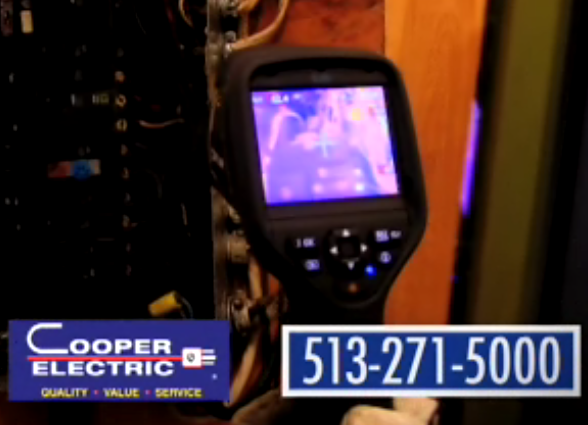 A thermographic inspection is used to detect thermal defects. The inspector uses an infrared camera to conduct scans of your electrical system in all other aspects of your home. If this is your first time hiring a thermographic inspector, you may not know what to expect. The following should give you some ideas as to what is involved with process, as well as how to prepare your home or office for the inspector's arrival.
 How to Prepare Your Home
Before your thermographic inspector arrives. You should also move any large furniture away from the walls and electrical outlets so that the inspector can get to them.The Thermographic Inspection
The inspector will arrive and will most likely educate you about your home or office and the scan itself. Some inspectors take the home owner or office manager along with them during the scans so that they can educate along the way, and some prefer to work slowly and in private so that all anomalies can be identified. During the process, the thermographic inspector will scan every inch of your home. The infrared camera or video will reveal heat as bright white for the warmest temperatures. Likewise, ambient or room temperatures, will show up as darker colors on the spectrum. This thermographic inspection will find problems with your wiring, malfunctioning appliances and equipment. These issues may not be seen by the naked eye, but the infrared equipment finds it and identifies it with ease.Source: http://cooper-electric.net/currentsafe-testing-thermography/
electrical services electrical parts home contractors electrician jobs electrical installation
Tuesday, January 29, 2013
Bathroom Wiring Needs
We all have them, bathrooms that is. Each bathroom in your home may be a different size and be equipped with different things, but ther are some similarities that we will discuss in this article. There aresome bare minimums when we look at the wiring needs of a bathroom. Let's consider the circuits needed and why.
...Source: http://electrical.about.com/b/2013/01/06/bathroom-wiring-needs-2.htm
Pulling Wire With Ease
After you've piped your home's electrical, you'll need to add wire to it. Wire reels can get tangled if you don't use some sort of support to ease the wire pulling effort. You could just let the reels go crazy on the floor as you pull off the wire, or... you could use a wire cart or wire caddie.
Wire carts and caddies hold spools of electrical wire of various sizes to make pulling wire easy. Both are designed to hold electrical wire mounted on spools. These spools of wire vary in length an physical size.
Wire carts are larger for ample space of wires of diffferent sizes and large wire pulls. Caadies usually hold from 4-8 reels of wire (#12 or smaller) and only 4 (#10) reels.
In this article, I'll explain the differences and why to use each. Are you ready to pull wire?
...Source: http://electrical.about.com/b/2013/01/26/pulling-wire-with-ease.htm
electrician company electrician tools electrician commercial commercial electrician electrician companies
Using Wall Lights To Highlight Your Home’s Decor
 If you have filled your San Gabriel Valley home with treasures and artifacts that you would love to display to guests and visitors, perhaps the installation of some well-placed wall lights could be the solution to all your problems. With a number of unusual and attractive designs available, lights that are installed on the walls of your home could be very beneficial in accentuating a picture, fireplace, nook, plant or other architectural element.
But why are wall lights so useful in highlighting the decorative features of our home? For one, they are known for being highly suited to the provision ambient lighting, which looks nice but isn’t overly useful for completing tasks by. For two, the way in which light is cast out from these fixtures is perfect for illuminating decorative elements that are placed on or around the walls of your home.
In the bathroom, it is essential that you have proper lighting installed by your San Gabriel Valley Lighting electrician, so that you can complete the daily tasks of shaving and applying makeup. Wall sconces, when fitted with the proper globes, are highly effective at casting a more natural appearing illumination across the space. They also avoid the creation of dark shadows, which can make a person appear tired or unwell.
In the dining room, wall lights are used to provide that finishing touch by adding an understated illumination to the walls (which are often left in shadow by ceiling fixtures). They are quite useful in making a space feel bright and cozy rather than dark and dingy, which makes for a much more pleasant dining experience.
In the living room, the correct sort of illumination is essential for setting the mood of your ‘relaxation space’. Wall sconces are widely used in these areas for drawing attention to particular elements of the room, such as a fireplace or a picture, and they are also suitable for lighting around the television without casting an annoying glare across the screen.
In the hallway, it is important that you get the amount of light right, as these rooms are renowned for being the darkest areas of the home. Well-spaced wall lights will effortlessly provide adequate illumination that really opens the space up and banishes those dark corners.
Source: http://www.accurateelectricalservices.com/CA-Electrician/lighting/wall-lights-highlight-homes-decor
Winter Home Heating Options
As we roll into the winter months, heating our home comes to be our #1 concern. Many of you have gone green by adding a wood burning boiler or a geothermal heating system. Then there's the conventional heating methods like gas furnaces or electric heaters. The most common are baseboard and portable heaters.
...Source: http://electrical.about.com/b/2013/01/15/winter-home-heating-options.htm
electrical supplies electric repair contractor electrical electrical contractor in what is an electrical contractor
MAY IS ELECTRICAL SAFETY MONTH

According to ESFi (Electrical Safety Foundation International). The Month of may is electrical safety month. Cooper Electric wants to remind you not to take electrical safety for granted. Every year fifty-three thousand electrical fires occur in U.S. homes, most of which are entirely preventable! May is a great time to review important electrical and fire safety practices in your home.
Cooper Electric's Safety Tip is to test your GFCI receptacle outlets, by pressing the test and reset buttons. This will show whether your GFCI's are functioning properly. GFCI's prevent deadly shock, in wet are locations, and should be tested once a year.
If you are concerned about your wiring. We offer a state-of-the-art electrical testing service called CurrentSAFE. CurrentSAFE is a comprehensive test of your entire electrical system. Contact us today at 513-271-5000, and have our specialist out to your home to see if CurrentSAFE is right for you.
Source: http://cooper-electric.net/may-is-electrical-safety-month/
Beware of Phony Electricians and Scams
 Hiring an electrician means inviting someone into your property and allowing him to tinker with your wires and outlets. Faulty wiring can cause further headaches and costs in the future – or worse – it could set your house on fire. So when searching for an electrician, be sure to check for the following things:
- License – Here at Southern Coast Electrical Services, we employ only fully licensed electricians who have passed our thorough background check. Our company is also accredited by the BBB, guaranteeing quality workmanship and professionalism.
- Reviews – Look for reviews and never trust a company without any online presence. It’s the digital age –people quickly post warnings about scams; as well recommendations for good electricians. We even have testimonials from our customers who can vouch for our staff and service.
- Emergency Service – Electrical problems may arise any time. This is why we have professional electricians in Miami and West Palm Beach on call 24 hours a day, 7 days a week, ready to rush and cater to your electrical needs.
When it comes to finding the most reliable electrician in South Florida, take the necessary precautions and choose an electrical services provider with fully licensed electricians, positive reviews and 24/7 emergency service.
electrician company electrician tools electrician commercial commercial electrician electrician companies
Why Only An Electrician Should Upgrade Your Service Panel? Electrician Broward
An electrician in Miami can install a flat screen, fan or smoke detector
 If you are installing a new device, you want a licensed electrical contractor in Miami to hang it or do the wiring. If you try and do it yourself, the device may become unstable and possibly fall over and break into a million little pieces.
Even worse, you run the risk of messing up the job of the wiring. A bad wiring job can lead to fires that burn down your building or home and put the lives of countless others in immediate danger. Is it really worth trying to save a few bucks by wasting your whole day doing a job that might eventually cost you a lot more. Besides the obvious risk of human life, a fire can destroy many things like photos, clothes and sentimental items that can not be replaced.
Also, if you go the cheap route, the electrician in Miami may not even have insurance or be licensed. You might even think that you did the right thing by hiring a professional, but they could very well be some fly by night con artist company that has no idea what they are doing and are not concerned with the your safety. They will give you the lowest price just to get a quick buck. Many companies operate like this because they shut down and just change names. We have been in business for a long time and not going anywhere! You can check our status at the better business bureau and see that we have an A rating.
We highly suggest that you subscribe to our FL electrician blog and visit our website for more information on: Miami Electricians and South Florida Electrical Contractors.
licensed electricians residential electrician electrician company electrician tools electrician commercial
Monday, January 28, 2013
Smoke Detectors
Source: http://blog.atselectricinc.com/2012/07/smoke-detectors-6/
Replace circuit breakers with licensed electricians in Miami, Ft Lauderdale or West Palm Beach
If you need to replace a circuit breaker or need work on your electrical panels, an Electrician in Fort Lauderdale, West Palm Beach or Miami Electrical contractors can do the neccessary work for you.
Do not try to attempt any electrical repairs on your own as this can be extremely dangerous to your health and risk the safety of your home. Regardless of the location, whether it is your home or business, you must have a licensed Miami electrical contractor handle any repairs involving electricity. If you do a sloppy job, you risk being electrocuted and possibly and electrical fire which can destroy your house and business as well as injure and even kill your employees or your family. It is not worth trying to save a few extra bucks. Do yourself a favor, get on the phone, search Google, Yahoo or Bing and hire a licensed electrician in West Palm Beach, Miami or Fort Lauderdale today.
 You can read reviews, check out the better business bureau and even call and email a few companies for quotes before making any big decisions. It always pays off to do as much homework as possible prior to hiring an electrical contractor. You want an electrician in Miami that is reliable and fairly priced. If you are rich or poor, nobody wants to pay more than they have to but your safety comes first. A fire or an injury will be much more expensive and may result in a death or damage to property or work that may be completely irreplaceable. We hope this advice has been useful to you in making a decision and if you need additional info about Electricians in Fort Lauderdale and Electricial Contractors in Miami, visit: http://sflaelectrician.com and read our blog
electrical parts home contractors electrician jobs electrical installation contractors electric
Electrician Burbank – When You Need an Emergency Electrician
Whenever you have an electrical issue that needs to be addressed immediately, then you may need to call an emergency electrician in Burbank. When confronted with this type of issue, it is always best to call right away. Waiting to deal with electrical emergencies can lead to worse problems and dangerous situations. To account for this type of electrical issues, most electricians provide emergency service at all times to ensure that your problem can be quickly and professionally taken care of. It is important that our electrical systems function safely and properly, making it necessary to provide 24 hour service.
Is It Really an Emergency?
One important difference between an electrician’s standard service and their emergency service is the rate. Emergency service typically costs a significant amount more than standard service, because it is outside of their normal hours. Before you pick up the phone to call an electrician Burbank after hours, think about whether or not your problem is an emergency. An example of an emergency would be losing power at your business such as a restaurant. Because the loss of power can lead to extensive inventory and business loss, it makes sense to have someone come out right away. Another example of an emergency situation would be any electrical issue that poses a danger to you or someone else.
After one of the technicians at The Electric Connection is on the way, all you will need to do is wait. Try to avoid messing around with the electrical issue on your own, because it could be potentially dangerous. Your best course of action is to get as comfortable as possible and wait for one of our electricians to arrive. This will save you from any unnecessary injuries, and ensure that you are ready to direct us to where we need to go upon arrival.
Source: http://www.theelectricconnection.com/electrician-burbank-emergency-electrician/
Towards Sound Energy Policy (Part I – Current Flaws)
For well-being, present and future, including overall governance, health and medical care, financial, economic, human rights, equality, peace, security and liberty, etc.,[1] we have to stop playing political games with energy policy in the developed countries in the West and turn to sound approaches.
In particular, Europe must withdraw from its desperate and destructive attempts at regaining some measure of world ‘leadership’, which it deservedly lost in the 20th century as a result of succumbing to dangerous extremist policies in many areas, including political, social, judicial, economic, military and international matters.
Europe’s ”leadership” conceit includes questionable, radical energy policies, particularly in electricity systems, to ”de-carbonize” the world with “new” (really ancient) renewables. This futility is wasting resources on a grand scale as is now beginning to be realized (here and here).
Unfortunately this may be a case of too little too late unless we act now to get off this lemming-style dash to catastrophe, energy being the master resource. We face more than one such ‘cliff’ today, and any that can be avoided must be.
This cannot be stated too strongly. It is not an argument from a special interest point of view or in support of any specific economic theory, not to say that any of these is necessarily invalid. It is from the perspective of what is best for mankind, and based on the work of internationally respected energy experts.[2] I repeat a disclosure statement which I have stated before.[3]
The case for the current flawed energy policies (primarily focussed on electricity) in the West is based on issues surrounding climate change, 21st century industrial development (jobs), fossil fuel and nuclear concerns, and energy independence/security. The following is a necessarily brief overview of very complex matters, but should serve to provide an instructive, broad context.
Part I today addresses the drivers and flaws of current energy policies in many developed Western countries. Part II tomorrow deals with sensible approaches, which are quite evident, but apparently politically impossible within most Western democracies.
Climate Change
Possible futures facing us include: anthropogenic global warming (AGW, that is human caused), non-A GW (not human caused), and non-GW (global cooling). There are other potential challenges including pandemic, economic/financial collapse, world war over resources, famine and unexpected, unwanted surprise events, any one of which could have similarly catastrophic effects.
Long-term forecasting, based on significant uncertainty in our understanding of the complex ecosystem, and producing an ‘expected’ outcome, is not a rational process as the foundation for energy policy. I see no sensible alternative but to put equal probability on all outcomes, ignoring at this level of analysis, for example, that AGW may turn out to be anything from the case where adaption is possible to extreme consequences.
We cannot ignore the risk of AGW, but it should not be allowed to cloud our understanding of the total situation that we face and the determination of the optimal approach to best position us to meet any challenge/threat, known and unknown.
Renewable Energies
Those addressed here include hydro, and the ‘new’ renewables, wind and solar. There are others, but of less immediate interest. The ‘new’ renewables are claimed to be the ‘silver bullet’ solution to all the issues raised in the first section above. They are not.
As will be further discussed in Part II, time periods are an important consideration. All renewables have three categories of technologies employed: old, current, and future, with some overlapping. In varying degrees, these are all old energy sources that we naturally turn to in early stages of our development of harnessing energy for our use.
To illustrate this, when the percentage use of hydro for electricity generation by country is ranked, 38 of the top 41 countries are in African, Central and Southeast Asia, and Latin and South American. There are only three developed countries – Norway, New Zealand and Austria, largely due to their topography. In absolute terms, China is by far the leader, at more than double the next largest, the U.S.
One of the problems with hydro is the land area required for reservoirs. This takes 60% of the total land requirements for all electrical energy considerations including fuel extraction, refineries, transportation (including pipelines), generation plants and transmission lines.
It is one of the major drawbacks of old and the currently popular renewables that renders them not scalable to the levels required to have an impact on the issues we face, even ignoring all their other shortcomings. Thus none, including hydro, is a candidate to replace fossil fuel or nuclear plants.
Wind is often presented as a new technology needing support for its further development to overcome cost disadvantages compared to fossil fuels for example. This basic mechanical energy capture technology is centuries old and has little opportunity for improvement, except to increase the size and height of the rotor. You can safely ignore schemes to put wind turbines in our oceans or fly them in our skies. They simply should not be any further part of the discussion, except as described here.
Within the group of hydro, solar and wind current renewables, only direct conversion to electricity by solar has potential for technology development. The power density[iv] of solar flux impinging on the earth’s surface is in the order of 102 watts/m2, which is in the upper range of today’s hydro-electric plants. At this total level of energy flux available, solar is about 100 times greater than wind. Solar’s total available power density is also in the upper range of the requirements of our cities, but only at the lower range of heavy industries.
Here we are talking about annual energy flux, ignoring peak levels for both sources and uses, and 24-hour-per-day availability. This means that reliable electricity generation technologies with higher power densities must be present at levels to meet the full spectrum of the demands of modern societies regardless of time of day or season, including growth, old plant retirement and backup needs. Notably the upper range of power density in industrial energy use is at the lower range for that of thermal power plants.
Today PV solar has a power density of less than 10 W/ m2, which is about 10% of the total available solar flux. Wind turbines provide less than one-fifth of that for solar, in part because of the limitation of Betz’ Law. With solar there is room for notable improvement given the possibility of technology advancement to do this. This is not an argument for the commercialization of existing PV technology, but for R&D support for future solar technologies.
Not differentiating between current and potential future renewable technologies is a fundamental error in thinking about new renewables today, and as already indicated, not all renewables have the same potential. At this point , it is reasonable to say that future solar (thinking in terms of the last half of this century for commercialization) could likely be an important adjunct to other more power and energy dense or intense sources. Pleasant surprises are also a possibility.
Solar would also be relevant to future grid architecture, which will likely incorporate distributed generation, misleadingly thought of today as the ‘smart grid’. Any hasty implementation of such is far from smart, as previously discussed here and here. It must be remembered that distributed generation includes only facilities that are intended to meet local demand and not to feed the grid for distant consumption.
Unfortunately for us all, many have invested considerable political and other forms of capital in the support of a major push for new renewables. These sources fail to be part of any feasible approach in the foreseeable future to deal with the issues of climate change, sustainable industrial/economic development, fossil fuel or nuclear energy use, or anything else for that matter. The recent extension of the Production Tax Credit is a sad testament to such folly.
Emissions Trading/Carbon Caps, Carbon Tax
These represent approaches to address climate change concerns through government and international agreement measures, which inherently involve politicians and bureaucrats with insufficient knowledge and questionable motives making important decisions. Through two decades and a number of summit conferences, the top-down Kyoto international agreement approach involving carbon caps has been ineffective. The European emissions trading system (EU ETS) is a generally acknowledged failure as an effective scheme for emissions reduction.
A carbon tax is another approach now being considered, but the conventional view based on production is a flawed one, which typically results in carbon leakage. The way this plays out, as it has in Europe, is the taxed jurisdiction will tend to de-industrialize because of higher costs and import less expensive products from another jurisdiction with a high carbon footprint. The overall effect of global carbon reduction (the only way to look at it) is thwarted. The commonly quoted and used production-based carbon footprint per capita measure by country is not sensible, and should be ignored.
In theory, changing this to a consumption tax by determining the carbon inputs by product is more relevant. Imports are handled by imposing a border tax, which is credited with any product content tax imposed by the exporting country. This allows unilateral initiatives without the carbon leakage disadvantages of the production tax. Exporting countries then have the option of implementing their own versions to capture the revenue. Emissions per capita now becomes more reasonable a measure, but still must be considered within the context of overall emissions by country.
One of the major problems with this is its complexity because it is a much more difficult to determine the carbon content by product than by general production process. There are approaches to address some of this, such as those proposed by Helm,[v] but all considered a carbon tax is complex, subject to considerable political and bureaucratic mismanagement and likely will produce many unintended consequences.
It seems to me that any carbon tax initiatives should not be implemented prematurely, if at all.
Energy Efficiency and Conservation
For the sake of simplicity, matters surrounding energy efficiency and conservation have not been addressed. If these are counted on and planned targets are not met, we may face a serious energy shortfall.
The necessary initiatives for these, along with such other matters as the truly necessary grid improvements for example, should flow naturally from an umbrella of a sensible energy policy described below. Market signals, not top-down planning, can “plan” even a market of the uniqueness of electricity, where supply must be instantaneously consumed given the costliness of storage.
I would also caution to differentiate between market conservation in the face of price signals and government conservationism where the public policy assumption is that energy usage in not good per se. The latter assumes that planners know more than individuals and is based often on physical waste rather than economic waste.
Conclusion
The current path we are set on in many of the developed Western countries is not in our best interests in the short to medium term of approximately the next 40 years. Part II will show sensible and necessary approaches for this time period.
Footnotes
[1] I would normally avoid the use of ‘etc.’ , but it is used deliberately to indicate an almost endless list of matters, intricately bound with, and dependent upon, abundant, reliable, high-quality energy availability.
[2] I have been influenced by the following, who many deem to be among the most knowledgeable on energy matters. It should be added that you do not have to agree with everything anyone says to gain from their knowledge.
(a) Vaclav Smil is not easily categorized. The following comments are taken from Wikipedia, which has done a reasonable job of this.
Smil’s interdisciplinary research interests encompass a broad area of energy, environmental, food, population, economic, historical and public policy studies. He has been an invited speaker in more than 250 conferences and workshops in the USA, Canada, Europe, Asia and Africa, has lectured at many universities in North America, Europe and East Asia and has worked as a consultant for many US, European Union and international institutions. In 2010, he was named by Foreign Policy magazine to its list of top global thinkers.
(b) Deter Helm (from the jacket of his recent book, The Carbon Crunch, Yale University Press) is professor of energy policy, University of Oxford and Fellow in Economics at New College, Oxford. He is a member of the Economic Advisory Committee to the UK Secretary of State for Energy and Climate Change, and Chair of the Natural Capital Committee. In 2011 he was Special Advisor to the European Energy Commissioner.
(c) David MacKay is the professor of natural philosophy in the department of Physics at the University of Cambridge and for the past three years has been the chief scientific adviser to the UK Department of Energy and Climate Change. It has been reported that he is bringing a reasoned, scientific approach to UK energy policy, and if recent events are any indication, he appears to be succeeding. He is also noted for his book on rational approaches to energy policy, Sustainable Energy: without the hot air, which has to be interpreted very carefully.
[3] In the interests of full disclosure, I have not owned (to the best of my recollection and possibly through mutual funds at some distant time), do not now own, or plan to own, investment instruments in the energy sector. My only investments, outside of Canadian government guaranteed cash equivalent securities, is a small holding in gold stocks. I subscribe to an energy investment newsletter as another “window” on energy considerations. I have not received one cent for these posts from anyone, and I am not beholden to anyone who might benefit from them, except to the society in which I live, which I want to protect for the benefit of my grandchildren and their descendents.
[iv] For the definition of this, and related concepts, I rely on Smil’s views in his book, Energy in Nature and Society, and much of what follows are direct quotes. Power density (W/m2) is perhaps the most revealing measure of the ability of energy sources to meet requirements. In part, power density is a measure of the land area required to meet the energy flux requirements.
It also has a power component (W, and W = m2 x W/m2), which is the measure (and means) of providing energy flow, or flux (W = J/s). Modern societies, and their associated complexities, are not possible without reliable, high energy flux with power densities much higher than average needs to meet peak, plant retirement and growth requirements.
Diffuse energy sources (hydro, wind and solar) have low power densities, and coupled with low, average power capabilities, are inadequate to meet our needs regardless of their total, diffuse energy content. Further, due to the stochastic nature of their availability (in varying nature and degrees), they also lack the necessary reliability.
Energy density, measured by volume, in J/m3 (not area), or weight, J/kg, is another factor, and its relevance is more easily understood. It is decisive for all portable applications or where space and weight are at a premium. Energy concentration (J/m2) reveals the spatial density of resources, a critical measure of extraction or harnessing methods and costs and associated infrastructure needs.
Source: http://www.masterresource.org/2013/01/sound-energy-policy-i/
licensed electrician electrical supply company electrical service contractor electrical estimating licensed electricians
Alliance for Wise Energy Decisions: Newsletter Update
[Ed. note: This is the second in a continuing series at MasterResource, the first of which was published November 21st.]
The Alliance for Wise Energy Decisions (AWED) is an informal coalition of individuals and organizations who are interested in improving national, state, and local energy & environmental policies. Our basic position is that energy and environmental issues are technical matters that should be addressed by genuine science.
Instead of a science-based approach, our energy and environmental policies have become a playground, even a cookie jar, for those who stand to economically or politically profit from them. As a result, anything genuinely science-based in these policies is usually inadvertent and accidental.
A key element of AWED’s efforts is public education. Towards that end, we send out a newsletter every 2-3 weeks in the interest of balancing what the mainstream media too often conveys about energy and environmental matters. The (free) subscription newsletter readership is now about 10,000.
Some Recent Energy & Environmental News – 1/21/13
As we start a new year, and face new challenges, one of our most pressing issues is to do a better job with Public Relations. Although we have the facts on our side, wining public policy battles requires more than being right.
We need a few good people who have PR experience, and are willing to commit some time to helping us formulate and implement a better PR plan. If you are interested (or know someone else who would be), please email me.
I’ve just put together a new page about fixing the RPS situation that exists in several states. We will be working with citizens where the political atmosphere is receptive to correcting some of these charades. If you have solid evidence that your state is such a case, please email me, ASAP.
In my prior PTC post-mortem email, I should have added another one of our primary goals for 2013: To get EIA to have more accurate levelized energy costs.
As always, our proposed national energy slogan is “All of the Sensible” (in contrast to the absurd “All of the Above”). Please pass it on.
More reports about greed energy economics:
On the Production Tax Credit (PTC) front:
Representative Mike Pompeo is reintroducing his “Energy Freedom and Economic Prosperity Act” which includes removing the PTC.
Select Senators are working on a proposal for getting rid of the major “under construction” loophole in the H.R.8.
Naturally, wind proponents are resisting financial sensibility.
An important study showing the real costs of wind energy. (A fascinating Bloomberg article that says that the DOE is projecting that US coal use will increase, natural gas prices will stay low, etc.)
A good new site focused on property value losses due to turbines.
More reports about turbine health matters:
An excellent new report (Wisconsin) about wind acoustics. (Some subsequent news reports about this study are here and here.)
Health Experiments on People without their Consent.
Massachusetts residents take town to court re turbine.
More reports about turbine wildlife matters:
A superior wildlife article written by an independent wildlife expert.
Miscellaneous energy reports:
An interesting (unexpected) perspective on Obama’s energy plans.
Greenpeace Wind Energy Claims are Blown Away.
An important court case that rules that wind is not baseload power.
A powerful story about indigenous Mexicans fighting wind development.
Poland and Czech Republic Ban German Green Energy.
Courageous Engineer fights Ireland’s Energy Policy.
Wind Can’t Replace Nuclear Power.
China Blazes Trail of Thorium Nuclear.
Absolutism in the Church of Green.
Government Of, By and For Activists.
Some recent global warming articles of interest:
NY Times is Dismantling its Environmental Desk!
Are we Slowly Waking up to Reality?
Britian’s Met Office revises their global warming projections down.
Global Warming Stopped 16 Years Ago.
A Russian view: Global Warming – a Tool of the West.
A Barrage of Lawsuits Shuts Down Science Whistleblower Site. [Although the site was primarily about problems with medical science, the exact same issues are going on in the energy and environmental areas.]
Some other recent articles of general interest —
Please watch this video which puts everything into perspective.
Please pass this information on to other open-minded, science-oriented people. If anyone would like to be added to or removed from the email list, please let me know.
John Droz, Jr., physicist & environmental advocate
Source: http://www.masterresource.org/2013/01/alliance-for-wise-energy-decisions-newsletter-update-2/