Thursday, October 31, 2013

5 Energy Savings Myths Debunked

Nowadays, it seems as though everyone wants to save money while saving energy. Whether you do it for your wallet or the planet, taking extra steps to go green definitely has its benefits. But there’s so much information out there, it’s hard to know what’s actually true!

Myth #1: Closing your A/C vents saves energy.

Since energy is consumed by the air unit itself, closing your vents will not help with your use! When you close the vents in one room, it restricts the air at that specific vent, redirecting the air to other locations and through possible leaks in the duct system. Closing vents can also put pressure on the fan that pushes the air through the system, ultimately causing the system to work harder.

Myth #2: Leaving a ceiling fan on will cool a room—even if no one is in it.

Fans cool people, not rooms! Ceiling fans circulate the air in the room to create a draft, making you feel cooler—they don’t actually lower the temperature in the room. Leaving your ceiling fan on when you’re not in the room is a waste of both energy and money. To start saving, make sure you turn fans off before leaving a room.

Myth #3: Setting the thermostat higher heats your home faster.

Although setting your thermostat higher does have the potential to increase the run-time of the heating system, doing so will also cause the system to use more energy. Not to mention, your home can become uncomfortably hot extremely fast. Setting the heat to an appropriate temperature will get the job done—just be patient!

Myth #4: Leaving a light on uses less energy than turning it off, then on again.

As ridiculous as it may sound, some people do believe that leaving a light on for an extended period of time—rather than turning it off and on again—uses less energy. Despite the on again/off again effect, there is actually no significant additional power drawn when turning on a light bulb. Lights should always be turned off each time you leave a room, even if it’s just for a few minutes. There’s no reason for a light to be on in a room with no one in it. It’s wasteful and will heat up the room, potentially making your A/C work harder.

Myth #5: Leaving your air conditioning running when you’re not at home is more efficient than having to re-cool a space once you return.

Although this is false, you should never turn the system off completely. In doing so, more energy will be used to cool down your entire house as your air conditioning unit tries to replace the warm air that’s accumulated throughout the day. At the same time, however, it’s inefficient to leave your air conditioning unit on all day. This will cause the compressor to operate regularly for the hours you’re not at home. Ideally, you’ll want to lower your system when you leave the house for extended periods of time and set a timer for about a half hour before you return home.

Source: http://powergenerationinc.com/5-energy-use-myths-debunked/

electric repair contractor electrical electrical contractor in what is an electrical contractor electrical service

Determining Subpanel Loads

So you've decided to add a subpanel but you are wondering what size to install and how many circuits you may need to accommodate your future needs. In determining the load that you may be adding, it is important to allow for additional power usages that you may not be adding right now. Just look back 10 years ago and decide what you have added to your home as far as electrical load goes. Maybe it's a much larger refrigerator, an extra freezer, more electronic devices, TV's or a swimming pool. The point is, your electrical demand continues to grow so plan for future growth as well.
By following my article on subpanel load calculations, you'll be able to configure a usable subpanel that has ample power available for you and your family's needs.

Source: http://electrical.about.com/b/2013/10/07/determining-subpanel-loads.htm

contractors electric electric contractors

Smoke Detectors

In most cases you have less than five minutes to escape in a house fire which is why being alerted immediately is important. Smoke detectors should be placed in every bedroom, every common hallway and in any change of ceiling height greater than 12 inches. Batteries should be checked monthly and changed often. Lithium batteries, [...]

Source: http://blog.atselectricinc.com/2012/07/smoke-detectors-6/

electrical contractors electric services electrical companies companies electrical electrical work

House Fire Investigation - Cause Electrical

NEWPORT, Ky. — July 28, 2013 - A house fire caused 100,000 dollars in damage and leaves residents without a place to stay.
Seven adults and one baby lived at the home that caught fire this afternoon in the 800 block of Roberts Street in Newport.
Newport Fire Department Capt., Randy Childress said the fire broke out around 2 p.m. One of the residents said he was sleeping when he smelled the smoke. "I look in the room in the back and smoke started coming in the door and I broke the door to make sure no one was over there and the building is on fire and that's all I really know,” said Gustavo Ramos. Picture 30 300x201 House Fire Investigation   Cause Electrical
Ramos said fortunately no one was in the building.
Childress said the fire started on the first floor and quickly spread to the second and third floors of the home, “After he left the door open, that allowed it to spread so if there's a lesson learned for the public is if you do see a fire shut the door,” said Childress. As for Ramos he said he wasn’t able to grab anything on his way out after making sure no one else was in the burning home, “I don't have a lot of clothes and stuff and I cook and I have my knives and I lost everything.”
Childress said the home appeared to be a total loss with the fire and smoke damage. He said the cause of the fire appeared to be electrical and started in the outlet running the air conditioner. Picture 19 300x276 House Fire Investigation   Cause Electrical
It took crews thirty minutes to knock down the flames, and because of the heat extra companies were called in from the Bellevue-Dayton, Fort Thomas, Covington and Southgate fire departments.
No injuries were reported and Red Cross is assisting the residents displaced.
For this reason, Cooper Electric offers a preventive service called CurrentSAFE, to Reduce the Risk of Fire. For more details on how to make your home safe and hazard free, call 513-271-5000.


ico tag House Fire Investigation   Cause Electrical Tags:  

Del.icio.us
delicious House Fire Investigation   Cause Electrical
Facebook
facebook icon House Fire Investigation   Cause Electrical
TweetThis
tweet House Fire Investigation   Cause Electrical
Digg
digg House Fire Investigation   Cause Electrical
StumbleUpon
stumble House Fire Investigation   Cause Electrical


Copyright © Cooper Electric [House Fire Investigation - Cause Electrical], All Right Reserved. 2013.

Source: http://cooper-electric.net/house-fire-investigation-cause-electrical/

electrical work electrical job

Solar Manifes-two

Due to the increasing number of individuals who have contacted us regarding our pages/posts and those who have chosen to bookmark our website for future reference. We felt it was necessary to add new material to help keep the content fresh and to keep people commenting and sharing which was the original reason we set [...]

Source: http://www.enlighten-electric.com/2012/03/solar-manifes-two/

electrician tools electrician commercial commercial electrician electrician companies industrial electrician

Mancave Credit

We recently did work on a man cave project with Tony Siragusa.

todd resch man cave1 Mancave Credit

share save 171 16 Mancave Credit

Source: http://reschelectrical.com/mancave-credit/

electrical commercial electrician contractor

California Energy Update: Part II

  • CA’s Green Energy Swan Turning Into Ugly Duckling; $5 Gas in CA? Lack of Cap-and-Trade Price Ceiling Could Bring It;
  • Santa Barbara Picks Drilling Over Greening;
  • Green Actions Cause One-Third of Human Caused Earthquakes; Study Questions Whether Fracking Causes Earthquakes;
  • New Fracking Website Posted Online by Western Petroleum Association

California’s Green Energy Swan Turning Into Ugly Duckling

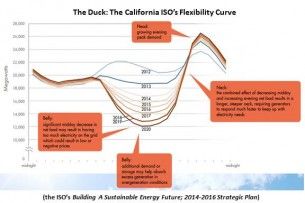
In the upside down world of California energy, no longer are the hot summer months or the occasional winter cold snap the only peak period of hourly risk to the state’s electric grid. The new daily peak hours of each day from 4 pm to 7 pm during the “shoulder months” of March, April and May and September, October, and November are the new peak month/hour times. What is causing this shift in peak time power is California’s transition to solar energy as the major source of base load power during day. California is in the process of transitioning up too 33%, and eventually to 51%, of its power from green energy sources under the Global Warming Solutions Act of 2006 (also called Assembly Bill 32).

Of particular concern to California’s Independent System Operator (ISO) are three hour periods in the Spring and Fall. It would be the sunset period of each day, not mid-day, that is already beginning to present a critical challenge to the reliability of electricity for customers. The problem during the critical hours from 4 to 7 pm is the steep ramp up of conventional gas-fired power as solar power winds down at sunset.

This ramping challenge has been visually depicted by the ISO in its now famous “duck graph” (click on the word “duck graph” to see this visual aid then click on the graphic to enlarge it). The sudden demand for conventional power to replace solar power at sunset is portrayed by the “neck” and “beak” of the duck figure. The tail of the duck is the drop in conventional gas-fired power around 8:30 am when solar power starts to kick in and crowd out conventional power. In California, green power gets to trump conventional power regardless of price.

The ISO has cautioned that what is going to happen, if it has not already happened, is that solar power will start to be dumped near sunset hours each day during Spring and Fall to assure system reliability. So taxpayers who have heavily subsidized solar power will see their subsidized power dumped from the grid even though customers have had to pay for it.

Of particular concern is how California’s grid is going to handle this increasing problem as the state mandates the shut down or retrofitting of all its coastal power plant to shift from ocean-water cooling (euphemistically called “once through cooling”) to air cooler systems. Many of the power plants that can’t afford this new air cooling equipment will shut down creating a compounded problem of how to schedule conventional gas fired power each day from 4 to 7 pm with fewer power plants. The San Onofre Nuclear Power Station in Southern California is already permanently shut down due to malfunctioning cooling rods.

The infamous “Duck Graph” phenomenon is what is driving new legislation in California to begin building very expensive battery power storage into the state’s electric grid. California’s new energy system is being put together by a process of “muddling through” rather than some grand design. While solar farms in Kern County can tout 8 cent per kilowatt power, total system costs are ignored. Part of the problem is nobody knows what total system costs will be for new green power. Green power typically requires new dedicated transmission lines so that pulsing due to variable sun and wind doesn’t throw the voltage pressure out of whack resulting in black outs. Green power also requires rebalancing systems. Thermal solar requires a source of desert cooling water for steam turbines. And now battery storage is needed to meet the “Duck Graph” problem.

Read more here.

$5 Gas in CA? Lack of Cap-and-Trade Price Ceiling Could Bring it

When California’s Air Resources Control Board (CARB) designed its Cap and Trade emissions reduction program it put a cap on industrial and utility air emissions. But CARB put no cap on the price that pollution permits (called “allowances”) can be bought for in Cap and Trade auctions by industries and electricity utilities that would rather buy a permit to pollute than reduce pollution.

This has resulted in several experts issuing warnings that if there is no price ceiling put on Cap and Trade pollution permits that there could be a sudden spike of gasoline prices by 50 cents to one dollar per gallon out of nowhere. Severin Borenstein of U.C. Berkeley Energy Institute, Robert Stavins of Harvard, and Todd Schatski of the Analysis Group have all issued warnings that if CARB’s auction prices go higher than $50 per ton of air pollution that gasoline price shock would hit California. Stock prices of oil companies could also suddenly plummet if emissions “allowance” prices get too high.

At its October 24-25 board meeting, the California Air Resources Board will reconsider its “Market Based Compliance Mechanisms” in its Cap-and-Trade program. CARB uses a 7% reserve of permits to flood the auction market with should prices get too high. The way California’s Cap and Trade system works is that each year the number of pollution permits will be intentionally reduced so that industries and utilities are forced to reduce emissions rather than buy permits. So it is inevitable that auction prices for permits will climb.

See more here.

Santa Barbara Picks Drilling over Greening

Santa Barbara is ground zero for the environmental movement in California after the infamous Union Oil Company oil spill in the Santa Barbara Channel in 1969.  Almost 45 years later, the Santa Barbara County Planning Commission approved 136 new oil wells on 32 acres in the unincorporated area of Orcutt in Santa Maria Valley.

The Orcutt project signals that local governments are now willing to overcome environmental opposition in return for jobs and tax revenues.  Over 80 percent of Santa Barbara County’s debt comes from unfunded pensions.

Offshore oil and gas drilling has historically gotten all the scrutiny and opposition form environmentalists in Santa Barbara County. But inland oil and gas drilling permits could be obtained over the counter at the County Planning Department with no public hearing or environmental review. However, now that California has a Cap and Trade law, oil and gas drillers have to be exposed to a public hearing as to how they plan to reduce their emissions under the state’s emissions cap. So now environmentalists from Al Gore’s Climate Group 350 Santa Barbara are showing up at public hearings that weren’t necessary heretofore. The group gets its name from 350 parts per million of CO2 in the atmosphere is a tipping point.

Santa Barbara’s Planning Commission approved 136 new oil wells at a site that has been conducting oil drilling for over 90 years. The 136 new wells would reflect one third of Santa Barbara’s total onshore oil wells. The new oil well site will not use fracking. Instead they will use conventional pressurized steam methods to extract the oil. The water will come from a reclaimed water pipeline from a local community.

The proposed 136 new oil wells will produce 3,000 barrels of oil per day.  Today’s spot price for oil is $142 per barrel.   Twenty-six pilot wells are already in operation. So, the Orcutt field would generate a $426,000 dollars per day; or over $155 million per year. -

The County Planning Commission authorized exceeding the Cap and Trade emissions threshold of 16 percent.  This left the project developer — Santa Maria Energy — with having to buy emissions allowances from the state’s Cap-and-Trade program for the 78,000 tons of emissions exceeding 10,000 tons.  At the going rate of $10 per ton at recent cap-and-trade auctions, that would equate to $780,000 in additional taxes imposed on the project.  When emissions allowances increase to $25 per ton, the cap-and-trade tax would rise to $1,950,000 per year.

Paradoxically, Santa Barbara Channel has the largest natural oil and gas seeps in the Western Hemisphere. About 86,000 barrels of oil seep from the ocean bottom each year, the equivalent to the 1969 Santa Barbara Oil Spill.   Since 1970, there have been the equivalent of forty three “1969” oil spills.

See more here

Green Actions Cause One-Third of Human Caused Earthquakes

Environmentalists have been in a state of near hysteria in the California media about the prospects of expanding fracking in the state. Environmentalists are clutching at any reason they can find to call for a moratorium or outright ban on fracking in California. A recent bogeyman for California’s liberal media has been the possibility of fracking causing earthquakes.

A new 2013 study from the University of Durham in the U.K. sheds some light on the risks of earthquakes from fracking. The Durham University study found 198 man-caused earthquakes from 1929 to 2013. About 65% of those human caused earthquakes were from industrial related activities. But about 35% of man-caused earthquakes surprisingly came from green activities such as: geothermal power plants, reservoirs, carbon sequestration, seismic academic research, green water solution salt mining techniques, and mandated disposal of fracking and oil drilling waste water in deep injection wells to comply with toxic waste laws.

That Durham University coincidentally found one third of man-caused quakes are green related is timely in California. The state legislature has passed a bill authorizing a new earthquake prediction system be implemented statewide but authorized no funds for it yet. The estimated $80 million in funding needed for such a system will likely come from shaking down oil and gas companies allegedly because their drilling operations caused earthquakes. But so do green geothermal power plants and carbon sequestration.

The impetus behind the call for an earthquake prediction system is the 2011 ocean earthquake and nuclear power plant destruction. But another impetus is a recent study done by a University of California at Santa Cruz geologist that geothermal power plant earthquakes can be predicted. The overwhelming number of quakes from geothermal power plants are small in magnitude. But the timing of this study couldn’t be more perfect to creating yet another bureaucracy in California. In L’Aquila, Italy, they have convicted seven earthquake experts for manslaughter for failing to adequately warn residents before a 2009 quake that killed over 300 people.

Read more here:

Study Questions Whether Fracking Causes Earthquakes

The study referenced in the above news synopsis is titled, “Induced Seismicity and Hydraulic Fracturing for the Recovery of Hydrocarbons,” conducted by  Richard Davies, PhD of the University of Durham, U.K. It reported that, of 198 human-induced earthquakes since 1929, only one was indirectly related to oil and gas fracking itself.

The major cause of the fracking-related earthquakes, on the other hand, was not related to fracking operations, but the disposal of fracking and shale gas wastewater required by toxic waste disposal laws.

No Fracking Earthquakes in 66- Years in California. Based on the Durham study and other online data sources found by this writer, only ten human-induced major earthquakes from all causes occurred in California over an 84-year time span concurrent with rapid industrialization (see table below).  None were from fracking per se. Four were from dams and reservoirs; 3 from geothermal power plants, and 3 from oil and gas extraction.

The total number of large natural caused earthquakes (over 5.0 on the Richter Scale) in California from 1680 to 2013 is 68. The total number of larger natural earthquakes (2.0+) in California since fracking started in 1947 is 1,675,278.

Since it isn’t fracking, but high pressure disposal of waste water from oil drilling of any kind to comply with toxic waste disposal laws that causes most petroleum industry quakes, fracking earthquakes are not thought to be a sufficient reason to set up a statewide earthquake prediction system.

California’s new fracking law regulates “acidization” as well as fracking. Acidization is an oil extraction technique used in the Monterey Formation in California rather than fracking. But acidization would present even less of a potential problem of earthquakes than fracking because the acid is flushed out of a well at the end of each job. Many oil companies are not using fracking water anyway and reportedly have shifted to using natural gas to extract oil and gas.

See more here

New Fracking Registry Posted Online by the Western Petroleum Association

In order to comply with California’s new fracking regulation law – California Senate Bill 4 –- petroleum extractors have to post online a list of their hydraulic fracturing operations sties. The website has been constructed by the Western Petroleum Association and is already up and running and is called FracFocusData.org. The database includes 55,598 well sites in the western U.S.

The website has a database search where anyone can search for a fracking site by State, County, Well, Operator, Well Number, and Fracking Ingredients. For example, I searched for how many well sites were in Los Angeles County. The FracFocus database indicates four well sites in L.A. County:

Plains Exploration and Production Company, Blair Hills, Culver City, 2011.

The Termo Company, north of Granada Hills, (2011)

Occidental Oil and Gas, industrial park in Compton, (2012)

Plains Exploration and Production Company, Blair Hills, Culver City, (2012)

The FracFocus registry can be found here.

###

For those interested in perusing Calwatchdog’s archived articles on energy in California here are some additional links:

CA Ratepayers Fleeced for Green Power Line in Canada (July 2)

Electricity Rate Shocks More Likely Than Blackouts This Summer (May 15)

California’s Legendary Energy Efficiency is Statistical Myth (July 16)

—————–

Wayne Lusvardi is with the Pacific Research Institute, a free market think tank in San Francisco and Sacramento. He writes for their website Calwatchdog.com, concentrating on water and energy issues. The information above is excerpted from Calwatchdog.com and other sources.

Source: http://www.masterresource.org/2013/10/california-energy-update-ii/

contractors electrical electrical contractors in electrical contractors electric services electrical companies

Electrical Components Compromised By Flood Waters

Seaside Heights, N.J. - Officials determined that the electrical fire which claimed 50 businesses in the Jersey Shore communities, was caused by electrical components. Investigators said the fire began under a building due to failed electrical equipment. "During the storm, this wiring and these connection became fully submerged in water," Ocean Country Prosecutor Joseph Coronato said in a news conference. "Over time, degradation of this wiring and these connections occurred." They urged that homeowners and other businesses affected by water to have their wiring inspected for similar issues.

 Electrical Components Compromised By Flood Waters

Here in Cincinnati, similar instances can happen with flooded basesments, or homes that have water leaks in upper floors that trickle down to lower levels, causing damage to wiring inside the walls. After a flood in the home or a business, even minor leaks or toilet over flows, a CurrentSAFE test of your electrical system can prevent electrical failures caused by components that are compromised during a flood. Degradation of electrical materials that are negatively effected by exposure to water are hazards. These types of things can be found and eliminated with the CurrentSAFE process.

Disaster Recovery is key, and our CurrentSAFE professionals understand the importance of returning the home and electrical system to the specific state your house was in before disaster occurred. We are knowledgeable in helping consult you on the processes that follow these types of unfortunate events.


ico tag Electrical Components Compromised By Flood Waters Tags:  

Del.icio.us
delicious Electrical Components Compromised By Flood Waters
Facebook
facebook icon Electrical Components Compromised By Flood Waters
TweetThis
tweet Electrical Components Compromised By Flood Waters
Digg
digg Electrical Components Compromised By Flood Waters
StumbleUpon
stumble Electrical Components Compromised By Flood Waters


Copyright © Cooper Electric [Electrical Components Compromised By Flood Waters], All Right Reserved. 2013.

Source: http://cooper-electric.net/electrical-components-compromised-by-flood-waters/

commercial electrical electrical commercial

Wednesday, October 30, 2013

Light switch mysteries solved!

Got a mystery switch? This can be a good thing, presenting an opportunity to add control of stair/hallway lighting from both ends of the hall or stairwell, or the ability to switch a receptacle outlet (or bypass a switch to eliminate mystery outages at the outlet).

A properly wired 3way or multi-way switch coordinates with other switches to control a light fixture or lighting zone (group of fixtures or recessed lights), or any other switched load.

In Philadelphia shotgun row houses, first floor 3way switches are often mis-wired to have no function (on the first floor) and only compromised function on a remote stair landing or other location closest to the lighting fixture. Using only the proper switch component and an understanding of multi-way switch wiring systems, we can often restore the original, coordinated multi-location switching configuration to control 2nd floor lighting (or other locations remote from your mystery switch) so that you can turn it on (or off before leaving the house) without climbing stairs or traversing rooms in darkness.

How can I tell if my switch is a coordinating type switch (part of a multi-way switch system)?

Simple single-location, standard ‘toggle’ style light switches have ‘on’ and ‘off’ embossed at the visible fulcrum of the lever, whereas switches designed to participate in a multi-way switching system may be ‘on’ or ‘off’ in either position, depending on the position of other switches in the system. Therefore, 3way and 4way switches have no ‘on’ or ‘off’ designation. So if your mystery switch is of the latter sort, you may have a miswired multi-way switching system. If your switch does have on/off embossing, it may be properly wired to control a lighting fixture or plug-in receptacle load (for floor lamps) from only one location, OR, it could be that an unskilled installer updated switch and receptacle devices in the home but ignored, lost track of, or abandoned a coordinating switch wiring system, turning a very useful switch location into a cloying mystery.

Multi-way switch systems often suffer from a mis-wired location that disables the other switches when that bad switch is thrown to the up or down position. 90% of the time, the original wiring is good but someone installed a wrong switch or installed the right switch incorrectly. Occasionally, the wiring system itself is deficient and the only fix is new cable runs between switch locations and/or the switched light fixture.

Licensed Electrician Robert Monk Light switch mysteries solved! Copyright Robert Monk, 2012

Source: http://www.phillylicensedelectrician.com/light-switch-mysteries-solved/

home contractors electrician jobs electrical installation contractors electric electric contractors

Electricity Revolution: The USB Cable (???)

From The Economist (1.25-page feature in the print edition of 10/19/13) – bolding by EleBlog:

Most phones and other small gadgets can charge from a simple USB cable plugged into a computer or an adaptor. Some 10 billion of them are already in use. Hotel rooms, aircraft seats, cars and new buildings increasingly come with USB sockets as a standard electrical fitting.

Now a much bigger change is looming. From 2014, a USB cable will be able to provide power to bigger electronic devices. In the long term this could change the way homes and offices use electricity, cutting costs and improving efficiency.

Source: http://electricalcontractor.com/?p=11573

electrical contracting contracting electrical

When do I need a home electrical service change ? Broward Electrician

Bob Frank, owner of Perfect Electric and Air Services, in discussing in this video tips on how to indentify the need for an electrical service change for your home. There are factors that increase electrical hazards and potential exposure to serious electrical issues that homeowners, at least most of them, wouldn’t be able to spot. Perfect [...]

Source: http://www.perfectelectricrepairs.com/2013/when-do-i-need-a-home-electrical-service-change-broward-electrician.html?utm_source=rss&utm_medium=rss&utm_campaign=when-do-i-need-a-home-electrical-service-change-broward-electrician

electrical installations electrical certification electrical inspection electrical maintenance electrician certification

The End of Incandescent Light Bulbs

There have been many articles in electrical trade magazines lately that have discussed the future inevitable ban of the old standard incandescent light bulb. California usually leads the nation in energy conservation trends and discussions there are leaning towards an all out ban by 2012. Many of you are probably using fluorescent replacement lamps in [...]

Source: http://blog.atselectricinc.com/2012/08/the-end-of-incandescent-light-bulbs-8/

construction electrician able electric

Direct Burial Cable, Wire Size, and Length

Direct burial cable is a special type cable that is designed to be run in a trench underground without the use of conduit to surround it. The electrical wires are encased in a thermoplastic sheath that seals out moisture and protects the wires within.

...

Read Full Post

Source: http://electrical.about.com/b/2013/10/22/direct-burial-cable-wire-size-and-length.htm

electrical installations electrical certification electrical inspection electrical maintenance electrician certification

$0.11/kWh: Why Wind Is More Expensive than Advertised

“Wind, an expensive energy resource, becomes more expensive (uneconomical) when costs are added for an apples-to-apples comparison to conventional generation. With natural gas prices at $4.00/MMBtu, and long-term cheap gas contracts available to anchor new power generation, wind power projects are typically uneconomic on a variety of grounds.”

A study by the National Renewable Energy Laboratory (NREL), the 2011 Cost of Wind Energy Review, estimated the cost of wind-generated electricity at $0.o72/kWh. This estimate is nearly 20 percent lower than the U.S. Department of Energy’s Energy Information Administration (EIA) estimate of about $0.087 per kWh.

But as I argue in a new study for the Institute for Energy Research (IER), Assessing Wind Power Cost Estimates (October 2013),  adding wind power to the power grid involves a number of other costs.

Adding in these costs, I came to four major conclusions:

  • The levelized cost of energy for wind is $0.109/kWh, more than 50 percent higher than NREL’s estimate.
  • NREL’s cost estimates exclude key categories of costs such as the cost of transmission and grid balancing for far-away, intermittent wind sources.
  • PTC-subsidized wind power projects distort electricity markets because they can bid as low as negative $0.035/kWh and still profit through the federal Production Tax Credit (PTC).
  • Adding wind power on PTC economics cannot reduce the overall cost of power to the economy — it merely shifts costs to taxpayers.

Background

The federal government devotes substantially more financial resources to subsidize the production of wind power than it does to study wind power. Indeed, the Government Accounting Office counted over 80 separate federal programs offering economic support to wind power producers, though the largest program by a wide margin is the Production Tax Credit.

State and local governments offer additional special support, over and beyond what oil, gas, or coal receive.

Disproportionate, sizable government subsidies for wind power—even exceeding the wholesale price of power–raises hard questions concerning costs relative to benefits associated with renewable energy policy. Thus, apples-to-apples comparisons between rival energies is necessary.

Surprisingly given the extent of federal policy support for wind power, little systematic effort has been made to calculate the overall net benefit (or cost) of public policies toward wind. [1] Given the importance of understanding the costs associated with wind power policies, this paper examines and assesses the most significant of the wind power cost estimates produced by the federal government.

Getting to Full-Cost Wind

NREL’s levelized cost of energy (LCOE), assessing both average capital costs and operating costs, are too low. Below, I use NREL’s methods and data for calculating LCOE, with adjustments for reasons described in the paper.

For capital costs, I up NREL’s installed capital cost estimate for wind power to $0.088/kWh (from $0.061/kWh) by:

· Assuming a 33 percent capacity factor for wind power rather than NREL’s assumption of 38 percent yields an estimate of $0.069/kWh rather than $0.061/kWh for installed capital costs.

· Assuming a 10 percent discount rate for evaluating investments instead of NREL’s assumption of 8 percent adds a little more than $0.01/kWh more to the estimated LCOE.

· Assuming a standard depreciation rate for tax purposes instead of NREL’s use of 5-year Modified Accelerated Cost-Recovery System (MACRS), an accelerated depreciation method, raises the cost by about 10 percent.

For operating costs, I increase NREL’s estimate to $0.021/kWh (from $0.011/kWh). A bit of this comes from (again) assuming a 33 percent capacity factor. But most of this increase is derived from the Berkeley Lab Wind Technologies Market Report from which NREL drew data.

Berkeley Lab admitted that its operating cost survey was limited in scope and may undercount costs. Notably, the two wind power projects for which Berkeley Lab has the most complete information showed annual operation costs averaging over $0.021/kWh, which I use.

So, summing $0.088/kWh capital costs and $0.021/kWh operating costs yields a new LCOE for wind power of $0.109/kWh.

My study also notes a number of additional costs associated with wind power: transmission costs, grid integration costs, costs imposed on other generators, and potential environmental costs.

These costs can vary widely given the location of the project, the status of the transmission grid the wind project connects to, and other factors. Where available the report describes per MWh cost (1,000 kWh) estimates for some of these factors, but no specific average cost is endorsed given the diverse range possible.

Summary

Wind, an expensive energy resource, becomes more expensive (uneconomical) when costs are added for an apples-to-apples comparison to conventional generation. With natural gas prices at $4.00/MMBtu, and long-term cheap gas available to anchor new power generation, wind power projects are typically uneconomic on a variety of grounds.

—————

[1] For one exception, see George Taylor and Tom Tanton, The Hidden Costs of Wind Energy (American Tradition Institute: 2012). Their estimate of $0.15/kWh is not evaluated here.

Source: http://www.masterresource.org/2013/10/11-cents-kwh-wind/

electrical engineer electrical wiring

Windaction News Issue: October 23, 2013

News and information from
The WindAction Group

facts, analysis, exposure of industrial wind energy’s real impacts

Recent Articles

Great Lakes ice shouldn’t stop wind turbines but will increase costs, engineering professor says

(23 Oct) USA | Michigan – Already offshore wind production is three times the cost of onshore wind farms such as the Consumers Energy Lake Winds Energy Park now producing electricity in Mason County south of Ludington, according to MAREC Director Arn Boezaart. Factoring in the cost of engineering wind tower protection against the ice is… MORE

‘Wind Turbine Syndrome’ blamed for mysterious symptoms in Cape Cod town

(22 Oct) USA | Massachusetts – They filed an earlier nuisance complaint against the town in July 2012, but the judge granted the defendants’ motion to dismiss on Dec. 3, 2012. “The heart of the issue is that they have been pushed off their land,” said Mannal. “They have erected these enormous industrial-scale turbines — larger… MORE

Cherokee residents file suit to block wind farm

(22 Oct) Alabama – Cherokee County residents have filed a lawsuit to block the proposed wind farm on Lookout Mountain, according to official court documents. This is the second suit filed against the developers, Pioneer Green Energy. Etowah County property owners who live near the proposed sites filed a similar lawsuit Aug. 1. MORE

MP calls for compensation

(20 Oct) Australia – Member for Hume Angus Taylor says rural land owners who’ve had their properties devalued by neighbouring wind farms deserve to be compensated. His comments come follow the publication of a preliminary report into the issue, which showed properties across the region that adjoined either energy developments or proposed energy developments… MORE

Wind farms are in the wrong place, says Energy Minister

(20 Oct) UK – The rush to develop on-shore wind farms is “over” and has damaged the renewable energy agenda, the Energy and Climate Change Minister said. Mr Barker promised that future wind farms would be developed off-shore, the Mail on Sunday reported. “We put certain projects in the wrong place,” he said. MORE

A limit on wind power

(20 Oct) Alaska – Mr. Craft is circulating a flyer claiming that Delta Wind will save GVEA members $4 million a year. But the numbers don’t add up. First, AEP wants 12.5 cents per kWh for its wind — 25 percent higher than power from GVEA’s Eva Creek Wind farm. Second, Mr. Craft has… MORE

Wind farm foiled family’s Italian dream

(20 Oct) UK – “We were contacted by the estate agent and he basically informed us there was no point in having this property on the market while this application was going through – it would be almost impossible to sell.” The family spoke to other estate agents and all said their home was… MORE

Let’s not hand over our community to Everpower/Allegany Wind

(20 Oct) New York – Everpower/Allegany Wind representatives have already violated their contract with the town of Allegany numerous times. Then, rather than completing the required study for the project changes they demanded, they brought not just one, but two costly lawsuits against the town. Do we really want to allow these individuals, already acting… MORE

More than 150 vehicles take to Hwy. 402 for mass rally against wind turbines

(20 Oct) Ontario – “Premier Wynne, you will learn we are a tough crowd to deal with when we are pissed off,” activist anti-turbine firebrand Esther Wrightman told a post-convoy rally of about 300 in Strathroy. “We will not be bullied and terrorized any more.” MORE

Ocotillo Wind Energy Facility — I am a resident

(20 Oct) California – “Our desert home is not really a home any longer, it is just a place to fight wind turbine syndrome, since the turbines crank out profits for huge investment companies and CEO’s get big bonuses while the uninformed public is forced to subsidize and allow production tax credits for a… MORE

NRG Energy to buy Edison Mission Energy for $2.64 billion

(19 Oct) USA – NRG Energy Inc. (NRG), the largest independent U.S. electricity producer, agreed to buy most of the assets of Edison International (EIX)’s bankrupt Edison Mission Energy for $2.64 billion to expand its coal and wind holdings. MORE

California poised to adopt first-in-nation energy storage mandate

(18 Oct) California – On Thursday, the California Public Utilities Commission is expected to vote on a groundbreaking proposal that would require PG&E, Southern California Edison and San Diego Gas & Electric to collectively buy more than 1.3 gigawatts of energy storage by 2020 — roughly enough electricity to supply nearly 994,000 homes. The… MORE

Bird migration routes coincide with high wind potential in Wyoming

(17 Oct) Wyoming – “Seventy-three percent of those places with good potential for wind energy development have high overlap with important migration areas,” Pocewicz says. Wind energy’s impact on bird populations, particularly migratory birds, has been a controversial subject as wind power has grown nationwide. There’s no recent data on how many birds are… MORE

Companies question whether Maine wind project met state bid requirements

(17 Oct) Connecticut | Maine – Other projects in the same bid were disqualified based on lack of site control, including one that made it all the way to the final stage in the process and was recommended, like the EDP Renewable project. The two companies, which submitted bids that weren’t chosen by the state, first… MORE

Tipton County windmill farms pit neighbors against each other

(17 Oct) Indiana – “This has probably been the most divisive issue I’ve ever seen in this county,” explained Tipton County Planning Commission President Jason Henderson. “It’s pitted neighbor against neighbor and people who would wave to each other, now don’t talk to each other.” MORE

Environment: Commission takes Bulgaria to Court for failing to protect endangered species

(17 Oct) Europe – The European Commission is taking Bulgaria to Court over its failure to protect unique habitats and important species. The case concerns the Kaliakra region, a migratory route and resting place for highly endangered species, where large numbers of wind turbines and other developments have been authorised without adequate assessments of… MORE

Nature Conservancy joins Osage Nation fight against Osage County wind farm

(16 Oct) Oklahoma – Mike Fuhr, state director of The Nature Conservancy, met with Osage Nation leaders Tuesday during the National Congress of American Indians at the Cox Business Center in downtown Tulsa to sign a memorandum of understanding that they would work in tandem to protect prairie lands in Oklahoma. MORE

‘Cuisinarts of the Sky’ continue to dodge environmental laws

(16 Oct) USA – How does the wind industry get away with it? The short answer: good lobbyists and a sympathetic administration that cares more about continuing subsidies than protecting birds. According to lobbying disclosures, in 2011, the American Wind Energy Association (AWEA) lobbied Congress, the White House, and the Interior Department on the… MORE

Bird discovery threatens closure of 50MW project

(16 Oct) Europe – A Spanish court has ruled null and void local authority permits granted to a 50MW wind plant, partly owned by Italian utility Enel, that has been in operation for three years. Avian group SEO Birdlife brought the case to court. It discovered the regional government of Castile and León had… MORE

Wind farm being torn down for scrap

(16 Oct) UK – Campaigners said the turbines “turned the area into an industrial graveyard” as they celebrated news of the removal of the rusty machines, which will be used as scrap metal. Locals said they had blighted the landscape and hadn’t worked for three quarters of the time they had been at the… MORE

1 wind farm entered service in Q3, but 7,562 MW now under construction

(15 Oct) USA – Only 43 MW of wind capacity was brought online in the third quarter of 2013, continuing a yearlong trend of minimal wind capacity installations in the U.S., but construction activity is ramping up as the industry seeks to tap into the extended production tax credit. The first three quarters of… MORE

Energy experts at ISO NE conference: Go slow on renewables

(15 Oct) Connecticut | Maine | Massachusetts | New Hampshire | Rhode Island | Vermont – “If you get it wrong, bad things happen,” Nicholas Miller, a senior director at General Electric’s energy consulting arm, said about developing the grid in accordance with renewable energy growth. “Germany didn’t see 20 Gigawatts with a ‘G’ (of solar) coming in in 24 months. They got their interconnection rules… MORE

Vermont wind farm blows down home values

(15 Oct) Vermont – The members unanimously agreed that the sound of the turbines– any sound– was enough. “It’s a noise that’s a constant sort of noise. I once described it as if you’re on a coastline and way off in the distance, there’s a freighter going by and you hear the engine going–… MORE

Statoil cancels $120 million offshore wind project in Maine

(15 Oct) Maine – Adrienne Bennett, LePage’s press secretary,  released a news statement Tuesday afternoon that reaffirmed the governor’s opposition. “The Administration has been perfectly clear through the regulatory process that the term-sheet offered by Statoil was ironclad in its cost – placing a $200 million burden on Mainers by way of increasing electric… MORE

Landowner To Ontario wind developers: ‘You guys did a lousy job’

(15 Oct) Ontario – “You guys did a lousy job,” Don McCabe, vice president at the Ontario Federation of Agriculture, told attendees as a panelist during the recently concluded Canadian Wind Energy Association Annual Conference and Exhibition. …Some rogue developers have come into the province and hastily staked their claim and often underestimated the… MORE

Despite impending permit denial, First Wind signed contract for Bowers Mountain wind project

(15 Oct) Maine – First Wind argues that its project complies with existing law. If it’s not successful, First Wind could face penalties stemming from its deal with National Grid. While the deal is complicated with various opportunities for First Wind to extend milestone deadlines toward completion of the project, the bottom line is… MORE

California’s alternative-energy program under scrutiny

(14 Oct) California – “Suddenly, you look up and there are literally hundreds of millions of dollars going into investments that produce marginal benefits,” said state Sen. Rod Wright (D-Inglewood), a member of the Energy, Utilities and Communications Committee. “You know the tale of Robin Hood? Well, this is robbing the ‘hood,” he said…. MORE

Energy costs widen gap in competitiveness

(14 Oct) UK – Consumers are less willing to foot the whole bill for policies to mitigate global warming. The shift in the debate is most conspicuous in Germany, where the Energiewende – Chancellor Angela Merkel’s historic drive wind and solar ­– has left German consumers with among the highest prices for electricity in… MORE

Wind farms win few fans

(14 Oct) Australia – Rural landholders across Australia may face a disappearing pool of buyers and plummeting values of up to 60 per cent because of neighbouring wind farms, a new, independent report has established. Most reports so far have not produced evidence that rural land holdings have been impaired by wind turbine development…. MORE

Lesser prairie chickens down by half in one year

(13 Oct) Kansas | Missouri | Oklahoma – In 2012, there were an estimated 34,000 lesser prairie chickens across their grassland range, which includes portions of Kansas, Oklahoma, Texas, New Mexico and Colorado. Kansas is home to about half the country’s lesser prairie chicken population. This year’s survey showed the bird’s population has declined by about half, down to… MORE

Wind-farm sites need close look

(13 Oct) British Columbia – Between 100 and 150 of these machines will be installed, likely on ridge tops where the wind is strongest. That would be a serious imposition on some of the loveliest scenery in our province. …No one knows how to deal with the unsightly aspect of wind farms. Visual pollution can’t… MORE

Ohio wind farms praised by some, criticized by others

(13 Oct) Ohio – Northwest Ohio has had wind farms in operation for about three years. Some are not happy with the wind farms, while others think the arrival of alternative-energy companies is the best thing that could happen to the region. …”We were told that the noise was minimal and that light flickers… MORE

NPPD board rejects plan to purchase more wind power

(13 Oct) Nebraska – These developers have been flooding NPPD with unsolicited proposals, hoping the state’s largest electric utility would commit to long-term purchase agreements before the federal production tax credit available for the projects expires Dec. 31. Proponents of the wind plan pointed to the income tax credit — $23 per megawatt-hour for… MORE

Wind farm subsidies generate £900m for Britain’s big six energy suppliers

(13 Oct) UK – An analysis of the industry’s figures shows that Britain’s largest energy firms received almost £900 million last year through a consumer subsidy added to household bills. The subsidy is worth £200 million more than the income from the electricity actually produced by Britain’s wind farms. In total, the big six… MORE

Navitus Bay wind farm has “more holes than Swiss cheese” say Dorset councillors

(11 Oct) UK – Consultants commissioned by the county council expressed ‘disappointment’ in a report to the committee that NBDL would not submit 70mm or 75mm focal length single frame printed images that would provide a clearer picture of what the development would look like. They said the wind farm could not be sited… MORE

European utilities CEOs urge end to renewables subsidies

(11 Oct) Europe – The CEOs of 10 utilities companies, which together own half of Europe’s electricity generating capacity, are calling for an end to subsidies for wind and solar energy, which they say add too much power to a market already struggling with overcapacity. MORE

Wind developers plan to seek tax deal soon

(11 Oct) Ohio – Jack Van Kley, an attorney for Union Neighbors United, said despite the revenue, taxpayers would be providing a tax break to a private company if the PILOT payment is approved. UNU is made up of a group of residents who are opposed to the project. “Certainly, if this project were… MORE

Fighting Climate Change by Killing Eagles

(11 Oct) USA – For some environmentalists, the threat of climate change is so great that we must allow wind turbines to kill bald and golden eagles. The argument I’ve heard is that renewables, including wind energy, will reduce the amount of carbon dioxide in the atmosphere. Less carbon dioxide reduces the threat posed… MORE

Jet fears for wind farm

(11 Oct) UK – In the consultation response Claire Duddy from the MoD said: “The turbines will be within the overlapping low flying areas of 13 and 20T where flight as low as 100ft is authorised. In conjunction with operations at RAF Spadeadam, aircraft are responding to air defence threat systems and the addition… MORE

Huron County wind turbines will double in number

(11 Oct) Michigan – “By sometime next year, we should have 328 wind turbines in Huron County because of what has been approved and what is under construction,” Smith said. “Ninety-eight turbines are currently under construction.” At the end of the year in 2012 there were 160 wind turbines in Huron County.  MORE

German ‘land of industry’ jeopardized by green push, lobby says

(10 Oct) Germany – Germany will threaten jobs and hamper growth if it persists with expanding renewable energy at the current pace, a chemical lobby said. Continuing with uncapped subsidies to renewable developers and removing aid for companies that use a lot of energy risks 211 billion euros ($285 billion) in gross domestic product… MORE

Homeowner says Green Mountain wind turbines noisy, caused damages

(10 Oct) West Virginia – In November or December 2011, the turbines produced noises and pulsations, according to the complaint. The complaint further states the noises and pulsations from the turbines cause annoyance, mental and emotional injuries, physical pain and decreased property use and enjoyment.  MORE

Recent Documents

Illinois School Superintendent Letter: Turbine noise creating health problems for students

(image)(8 Oct) Illinois – This letter, which was read at the Vermilion county board meeting on Monday, October 8, 2013, was written by William C. Mulvaney, the Superintendent of Schools for Armstrong Township High School and Armstrong-Ellis CUD #61 in Illinois. The project is Invenergy’s California Ridge with 134 turbines in Vermilion and Champaign counties. … MORE

Assessing wind power cost estimates

(image)(1 Oct) USA – This document examines the cost of wind power after considering federal subsidies and the effect the subsidies on market energy prices. The conclusion of the document is provided below. The full document can be accessed by clicking the links on this page. MORE

Infrasound, human health, and adaptation: an integrative overview of recondite hazards in a complex environment

(image)(1 Sep) – This important paper examines infrasound and its capacity to affect human health. The paper confirms that moderate strength correlations occur between the incidences of infrasound and reports of nausea, malaise, fatigue, aversion to the area, non-specific pain, and sleep disturbances when pressure levels exceed about 50 db for protracted periods…. MORE

The impact of wind turbine developments on surrounding rural land values in the Southern Tablelands, N.S.W.

(image)(1 Sep) Australia – This 33-page study released by Australian real estate consultant and registered valuer, Peter Reardon, provides sales evidence demonstrating that wind farms are negatively impacting property values. Mr. Reardon’s work examined the effect of more than 3000 turbines either in operation or proposed for construction across New South Wales in Australia…. MORE

Noise complaints at Heritage Garden Wind

(image)(8 Oct 2012) Michigan – This letter was submitted to the Delta County Michigan Building and Zoning Board in reference to noise eminating from the Heritage Garden Wind farm, a 28 megawatt (14 turbine) energy facility sited in Garden Township. The project became fully operational in September 2012 but by October 2012 complaints of noise… MORE


Source: http://www.masterresource.org/2013/10/windaction-news-issue-october-23-2013/

construction electrician able electric auto electrical repair construction electrical

The New Renewables Narrative: Buyer Beware

“Georgia … Texas … Arizona…. One story is an anomaly; two, a coincidence; three, a trend. When a so-called conservative Republican talks green energy and sounds like he or she is hitting the right notes, be careful. It’s probably the wrong song.”

Creating jobs…. enlarging the tax base… access to markets … energy choices for consumers…. monopoly busting … resource conservation….

The words and terms are being used by two government dependent renewable energy industries to sucker citizens and legislators to retain, if not enlarge, their taxpayer subsidies and ratepayer cross-subsidies in the current energy debate.

Make no mistake: This is an organized attempt to hoodwink  Republicans, conservatives, limited-government and free-market supporters, and even fiscally minded Democrats. Yet the means and ends of the deceivers are 180 degrees from what ordinary fiscally prudent citizens would support if they understood the gloss and what was underneath the hood.

If supporters of renewable energy, such as wind and solar, said it was heavily subsidized on both the state and federal level, had an artificial market created by government mandates, would help mitigate global warming, was the recipient of taxpayer dollars through Obama’s 2009 stimulus bill that funded projects like Solyndra, and was marred by cronyism, the right would run.

Instead the wily tactics have won over a few Republicans with strong conservative résumés (or given cover for those who really know better). Those sell-outs are working hard to bring their peers into the fold.

Georgia (Tea Party Patriots)

I first became aware of this scheme back in July—then, I thought it was just an anomaly. The Georgia Tea Party Patriots, cofounded by Debbie Dooley, partnered with the Sierra Club in support of increased solar in the state.

When I talked to her for a column I wrote addressing it, she told me it was all about choice. With a sneer, she called the utility company “a monopoly” and explained that solar would give them competition while consumers would get options. Recently Dooley found her way on to Fox News, where she touted the Green Tea Coalition and claimed to be battling “big energy.”

In addition to Dooley, the Green Tea Coalition’s launch featured three other organizers:

• Shane Owl-Greason—Co-founder of Georgia Solar Utilities, a solar energy company that will benefit from activities of the Coalition.

• David Blackman—Environmental activist since graduation from college.  He said he was connected to the Citizen’s Climate Lobby—an organization founded after assistance from former vice-president Al Gore.

• Seth Gunning—Beyond Coal organizer for the Georgia Sierra Club.  Another environmental activist since graduation from college.

But, Dooley is the one getting the news coverage because she’s from the right. The media loves that they have a convert, and she loves the attention.

So, the Georgia story was when I first became aware of this type of discordance. But it is not as unique as I first thought.

Texas (Jeff Clark: Wind Alliance)

In Texas, the poser is Jeff Clark, who served as a member of the advance staff for the campaign of George W. Bush and was later appointed by Bush to co-chair the U.S. Small Business Administration’s National Advisory Council.

At an October 16 panel discussion on the future of wind power in Texas, hosted by the Texas Public Policy Foundation and attended primarily by small government proponents, Clark touted his Republican bona fides, as he argued that wind energy promoted economic activity.

As reported by panelist Robert Bradley, Clark made a case for wind power by “providing all the statistics of how his industry had rescued poor rural areas in the state by providing income to struggling farmers and enlarging the tax base.”

While most true conservatives are opposed to government subsidies, Clark intoned the two-wrongs-make-a-right view by citing that since all forms of energy have received or do receive government subsidies, wind should, too. However, as Bradley points out: “this begs the question of how much, and whether subsidies for one energy source are gravy and for another are meat-and-potatoes.”

Clark’s most unique appeal to the conservatives in the room came when he implied that God is on the side of wind power: “The Bible tells us to wisely use our resources and to conserve.”

Arizona (Barry Goldwater Jr.)

The biggest shill yet can be found in Arizona in the form of former Republican Congressman Barry Goldwater Jr. An article from the left-leaning Mother Jones magazine says: “His support for solar comes from conservative free-market principles rooted in ‘creating choice for the American consumer.’”

Goldwater, son of five-term Arizona Senator Barry Goldwater, whose name is synonymous with conservatism in America, is chairman of the advocacy group: TUSK (short for Tell Utilities Solar won’t be Killed). Tusk’s logo is a red, white, blue elephant. (Note: the elephant is the symbol of the Republican Party. Coincidence? I don’t think so.)

Arizona’s specific battle is over net-metering—which the Mother Jones story on Goldwater describes as “a policy that allows homes and businesses with their own solar power systems to send excess energy they generate back to the grid and make money off it.”

This sounds like an appealing capitalistic venture that free-market conservatives would support. And they would, if the owners of those solar panels bought them with their own hard-earned money and when they “make money off it,” the rate the panel owners received was a reasonable wholesale rate—not the current retail.

In fact, as even the New York Times acknowledges: the economics of rooftop solar “depend on government incentives or mandates.” But you won’t find that in Goldwater’s support of solar.

Instead he’s trying to appeal to his fellow Republicans by talking about choice, competition, and making money—despite the fact that those who can afford the upfront costs of rooftop solar installation are doing so because of the state and federal taxpayer dollars that subsidize the purchase and installation. The entire rate-paying base must pick the grid (and other maintenance) costs for the growing percentage of solar users—as I’ve previously covered.

A Strategic, Organized Deceit

One story is an anomaly; two, a coincidence; three, a trend.

Why the push to deceive and convert those whose small government and fiscally conservative principles are in opposition to subsidies and cronyism found in green energy? Because the production tax credit for the wind energy industry ends on December 31, and like solar, it is dependent on the government largess.

With D.C. focused on debt and spending, those subsidies—which barely received a one-year-extension as a part of last December’s fiscal cliff deal—are a likely place to cut. After the Republican’s embarrassing fumble on the Continuing Resolution and Debt Ceiling deals—they should be looking at cutting or they should be looking at switching parties.

In Arizona, the all-Republican Corporation Commission is considering changes in the net-metering policy that would remove the favored treatment solar users receive—with a decision expected in November. For solar to survive, rank-and-file Republicans must be won over to the solar-subsidy side. If that happens, the Commissioners might fear an election upset and, therefore, not change the policy that allows those with solar power systems to “make money off it.”

In Georgia, the vote has already taken place. The Georgia Public Service Commission—with Republican support—voted to add solar to Georgia’s electricity generation. The Georgia victory makes the Arizona fight to persuade Republicans imperative.

These are just three stories of which I am aware. If my postulation that there is an organized effort to convince conservatives to support subsidies is correct, there are likely—or will be—similar stories in other states.

Hard Questions

If you hear a free-market sounding pitch for green energy that includes the words or phrases listed in the opening—beware! It is probably part of the Left’s plan.

Borrowing from Bradley’s report on the future-of-wind-power panel, I’ve developed a series of simple questions Republicans, conservatives, limited-government/free-market supporters, and fiscally minded Democrats should ask themselves when considering appropriate energy policy:

1. Should energy policy be based on government intervention—or voluntary transactions between buyer and seller?

2. Can an intellectual case be made—without climate alarmism—for renewables, such as solar and wind, knowing that we do not have the perceived 1970s’ energy shortage and the pollution of the 1970s has been cleaned up?

3. In the worst economic and fiscal crises of most of our lifetimes, should we be subsidizing energy generation that is inefficient, ineffective, and uneconomical?

4. Should we be using more-economical energy or less-economical energy?

5. And just why should we support:

a polluted tax code and government mandates favoring one energy resource over another?

the use of taxpayer dollars subsidizing favored energy sources?

the transfer of wealth from average citizens to supporters of President Obama, Harry Reid, and other high-ranking Democrats, through green-energy crony-corruption schemes such as Solyndra and the more than 50 other green-energy projects funded through the 2009 Obama stimulus bill that have already gone bankrupt or are circling the drain?

the limited-energy strategy of climate alarmists such as Al Gore and President Obama?

6. When countries with the best human health and the most material wealth are those with the highest energy consumption, why does the Obama administration continue to push for reduced energy consumption, increased energy costs, and intermittent energy availability?

Conclusion

When a so-called conservative Republican talks green energy and sounds like he or she is hitting the right notes, be careful. It’s probably the wrong song.

Don’t get suckered into joining the choir. Better yet, expose them on the spot and turn the tables by challenging business-as-usual for the perennially noncompetitive, taxpayer/ratepayer dependent industries.

Source: http://www.masterresource.org/2013/10/new-renewables-narrative/

electrican electrical contractors company